
ATV vs Snowmobile: Which Utility Vehicle Suits Your Climate?
ATV vs snowmobile: compare traction, year-round utility, maintenance and export demand to choose the right winter utility vehicle for your market and inventory.
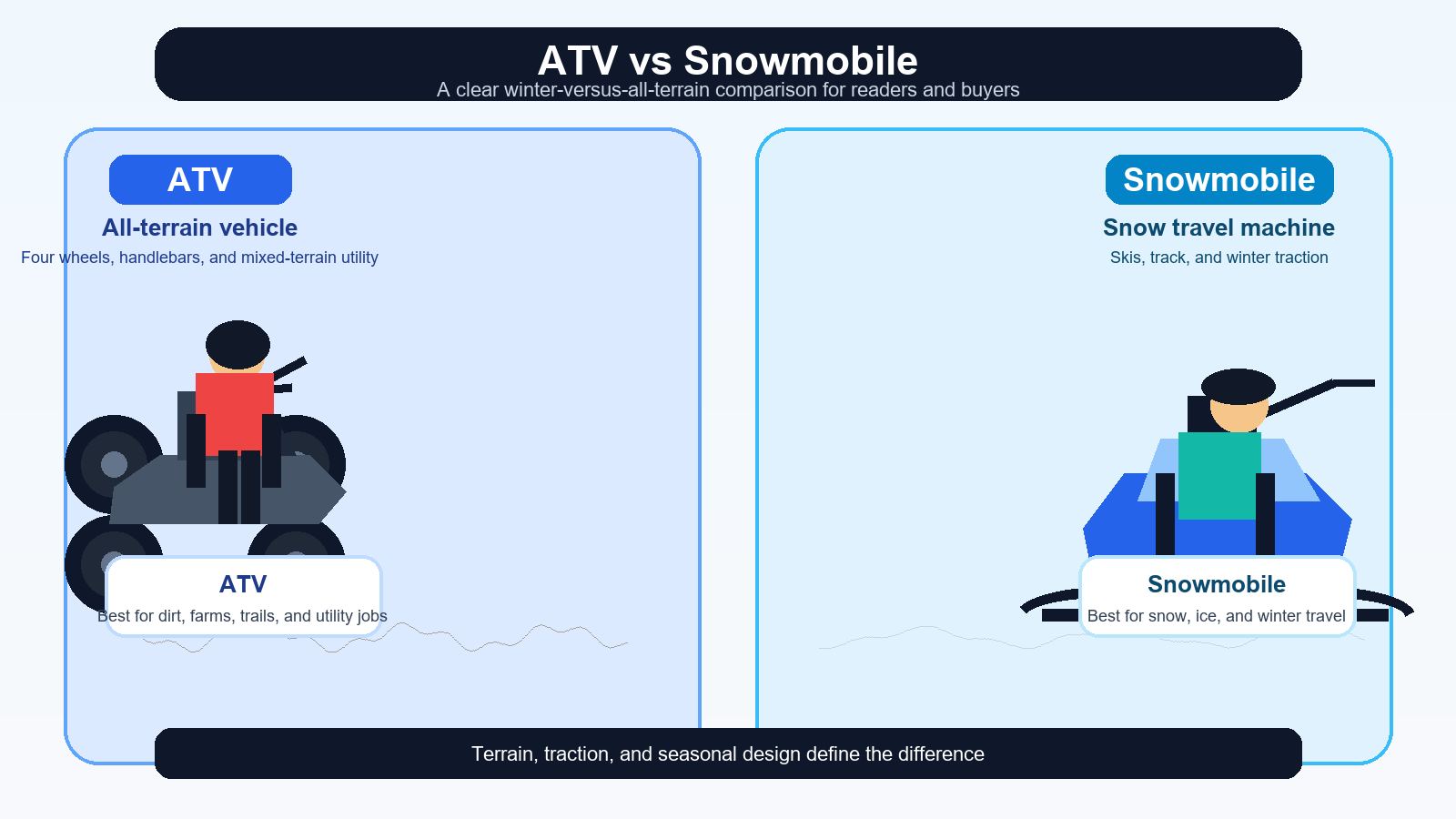
ATV vs Snowmobile: Which Utility Vehicle Suits Your Climate?
For importers, dealers and OEM sourcing teams building a winter-ready lineup, the ATV vs snowmobile decision is rarely a matter of preference. It is a question of climate, operating cycles and what end customers can realistically use. A snowmobile is a specialist machine engineered for deep, loose snow. A gasoline ATV is a general-purpose utility vehicle that can handle winter conditions with the right tires, preparation and rider expectations. This guide compares traction, year-round utility, maintenance, storage, price and export demand — so you can decide which platform, or which mix of both, belongs in your catalog.
Traction and Flotation: Tires vs Skis
The single biggest difference between the two machines is how they contact the snow. This determines where each can operate, how safe it is, and how useful it is beyond winter.
How Skis and Tracks Handle Snow Terrain
A snowmobile rides on two front skis and a rear track. The design makes it a snow terrain vehicle first and foremost: the track provides flotation so the machine stays on top of deep powder, while the skis steer with minimal drag. On packed trails and open fields, a snowmobile is fast, stable and remarkably efficient in deep snow — performance an ATV cannot match without expensive track kits.
The trade-off is specialization. Skis sink into soft ground in warmer months, and a snowmobile without snow is nearly useless. The rear suspension and tunnel are built for snow loads, not for towing, plowing or hauling cargo. This is the core of the ATV vs snowmobile trade-off: one is a winter-only specialist, the other a four-season generalist.
Tires, Chains and Track Kits for ATV Winter Use
A gasoline ATV relies on tires. In winter, most riders switch to aggressive lug tires, add tire chains or install a dedicated track system that converts the machine into a pseudo-snowmobile. Each option has limits:
- Lug tires: adequate on packed snow and ice with studs, poor in deep powder.
- Tire chains: improve bite on hard-packed trails and icy surfaces at low cost.
- Track kits: transform flotation and winter handling but add significant cost, weight and drivetrain stress.
In practical terms, ATV winter use is realistic where snow is shallow, groomed or intermittent. Where snowfall is measured in meters and the season lasts half the year, even a track-equipped ATV struggles where a snowmobile excels.
Year-Round Utility: Where Gasoline ATVs Pull Ahead
For a dealer or importer, the strongest argument for gasoline ATVs is the calendar. A snowmobile earns revenue or delivers work for roughly four to five months a year in most northern markets. An ATV is productive in every season.
Four-Season Work Cycle
The same machine that plows a driveway in January hauls feed in March, tills garden plots in May, moves construction materials in July and drags a trailer of firewood in October. Farms, ranches, hunting properties, orchards and light construction sites all run ATVs year-round. For a B2B buyer, this widens the addressable market: every customer who wants a winter machine can also justify a summer machine — and many who never see deep snow still need the utility.
ATV Winter Use: What Is Realistic
Winter ATV use is not fantasy — it is a matter of setup. With a plow blade, heated grips, a wind deflector and proper cold-weather tires, an ATV becomes a genuine winter utility vehicle for driveways, farm lanes and light municipal work. The engine, a four-stroke gasoline unit, starts reliably in cold when the battery, fuel and carburetion or injection system are maintained. Most suppliers recommend winter-grade oil, fuel stabilizer and block heaters in extreme climates.
The honest limitation is deep powder. Once snow exceeds roughly the height of the frame, tire-based machines bog down. That is the line where snowmobile territory begins.
What a Snowmobile Does That an ATV Cannot
Snowmobiles are built for one job, and they do it exceptionally well. On groomed trail networks, they cover long distances at highway-adjacent speeds with minimal fuel. They cross lakes, climb steep powder slopes and follow terrain that would bury a tire-based vehicle in minutes. For regions with organized trail systems — which often require registration, insurance and a trail permit — a snowmobile is the only practical personal vehicle for much of the winter.
There are also cultural and seasonal factors. In Canada, Scandinavia, the northern United States and parts of the Alps, snowmobiling is a major recreation economy with clubs, events and rental fleets. Dealers in those regions treat snowmobile buying as a seasonal, high-ticket retail event with strong accessory demand: helmets, suits, heated gear, cargo sleds and replacement tracks. If your export market has an established snowmobile culture, omitting the category means leaving that revenue to competitors.
ATV vs Snowmobile: Side-by-Side Comparison
The table below summarizes the key differences dealers and importers should weigh before committing inventory.
| Criterion | Gasoline ATV | Snowmobile |
|---|---|---|
| Primary surface | Dirt, gravel, mud, shallow snow | Deep snow, groomed trails, ice |
| Seasonality | Year-round | Winter only in most markets |
| Flotation in deep powder | Poor without a track kit | Excellent by design |
| Work capability | Hauling, towing, plowing, farming | Limited; light towing at best |
| Typical seating | 1–2 riders | 1–2 riders |
| Maintenance burden | Moderate; year-round wear | High if stored poorly; seasonal prep needed |
| Storage needs | Minimal; outdoor-capable | Protected, ventilated storage recommended |
| Purchase price range | Varies widely by size and spec | Varies widely by segment |
| Resale pool | Broader, all-season demand | Regional, seasonal demand |
| Best market fit | Mixed climates, farms, estates | Deep-snow regions with trail culture |
Maintenance, Storage and Total Cost of Ownership
For B2B buyers, the sticker price is only the start. Ownership cost, parts availability and service burden decide whether a vehicle sells once or builds a loyal aftermarket.
Cold Starts and Long-Term Storage
Gasoline ATVs are relatively forgiving. With a maintained battery, fresh fuel and the correct winter oil, most four-stroke models start in sub-zero temperatures. When the season ends, storage is simple: stabilize the fuel, disconnect or tend the battery, and cover the machine. Many ATVs live outdoors under a shed or tarp for years.
Snowmobiles demand more discipline. The engine and drivetrain sit through long off-seasons, and fuel that degrades in the carburetor is the most common cause of spring-to-winter failure. Dealers in snowmobile markets routinely see service revenue spike every fall for track inspection, carburetor cleaning, belt replacement and lubrication. That is not necessarily a drawback — for a dealer with a service department, it is recurring revenue. But it raises the buyer's cost of ownership and should factor into your warranty and support planning.
Parts Availability and Service Networks
Because gasoline ATVs share platforms across decades of models and global markets, parts are generally easier to source, and technicians need fewer specialized skills. Snowmobile parts are more seasonal and more regionally concentrated; in some export markets, a local snowmobile dealer network may not exist at all. Before adding snowmobiles to a catalog, confirm that your market has the service capacity, winter fuel supply and repair expertise to keep units running. Otherwise, a single season of support failures can damage your reputation faster than any marketing campaign can repair it.
Export Demand: Which Markets Favor Which Vehicle
Climate is the first filter, but culture and infrastructure are close behind.
- North America: Both categories are mature. ATVs dominate rural and farm demand; snowmobiles concentrate in the snow belt — Canada, the upper Midwest and the Northeast — where trail networks and clubs sustain year-round dealer activity.
- Nordic and Baltic Europe: Strong snowmobile demand for recreation and utility in remote areas, alongside steady ATV sales for forestry, agriculture and municipal work.
- Alpine Europe: Snowmobiles serve tourism and mountain operations; ATVs serve lowland farms and vineyards.
- Central Asia and high-altitude regions: Growing utility demand for both, often driven by mining, ranching and border operations in mountainous terrain.
- Emerging markets with mild winters: ATVs and utility vehicles dominate; snowmobile demand is negligible.
A useful rule of thumb for importers: if your region gets more than a meter of seasonal snowfall with long, continuous cold spells and has groomed trails or a tourism season, snowmobile demand is credible. If winter is short, shallow or intermittent, gasoline ATVs with winter packages are the safer inventory bet.
Climate-Based Decision Matrix
Use this matrix to shortlist a platform for each customer segment or export territory.
- Deep-snow region, trail culture, recreation focus: prioritize snowmobiles; consider a small ATV line for shoulder seasons.
- Deep-snow region, utility focus (farms, estates): lead with gasoline ATVs with track or chain options; add a limited snowmobile line only if demand is proven.
- Moderate winters (0.3–1 m of snow): gasoline ATVs with winter packages; snowmobiles only for dedicated enthusiasts.
- Mild winters, wet or muddy seasons: gasoline ATVs only; invest in mud-terrain tires rather than snow capability.
- Mixed-fleet dealers: stock ATVs year-round and take snowmobile orders on a pre-sale or seasonal basis to limit capital exposure.
Whatever the mix, the winter utility vehicle question should be answered with customer data, not intuition: survey your dealers, check local registration statistics and confirm service capacity before placing container orders.
Advice for Importers and Dealers
A few practical points from typical sourcing and sales cycles:
- Diversify, but lead with one platform. A catalog that tries to be everything risks shallow expertise. Lead with gasoline ATVs in most markets and treat snowmobiles as a specialist line with its own sales and service plan.
- Plan seasonal inventory. Snowmobiles must arrive before first snowfall — usually months ahead. Typical export lead times for container shipments mean ordering for winter demand often happens in spring. ATVs can be reordered throughout the year with less risk.
- Bundle winter packages. Plow blades, chains, tracks, heated grips and winter service kits lift average order value and solve the ATV winter use objection at the point of sale.
- Educate end customers. Most buyer complaints about ATVs in snow come from mismatched expectations. Publish clear guidance on snow depth limits, tire choice and storage — it reduces returns and builds trust.
- Think about the second purchase. A snowmobile buyer who rides hard replaces belts, skis and tracks regularly; an ATV buyer buys implements and accessories. Both are aftermarket revenue — plan for it.
Frequently Asked Questions
Can an ATV be used in snow?
Yes. With aggressive tires, chains or a track kit, a gasoline ATV works on packed snow, ice and shallow powder, and it remains a capable winter utility vehicle for plowing, hauling and farm work. Its main limitation is deep, loose snow, where a snowmobile's track and skis are far superior.
Is a snowmobile more expensive to maintain than an ATV?
Generally, yes. Snowmobiles require careful off-season storage, seasonal preparation and more frequent wear-item replacement such as belts, skis and slides. ATVs spread moderate maintenance across a year-round use cycle. Long-term figures vary by model and usage, but most dealers find snowmobile ownership cost per hour higher.
Which vehicle is better for year-round utility?
The gasoline ATV, by a wide margin. It hauls, tows, plows and works on dirt, mud and shallow snow in every season. A snowmobile is essentially dormant outside winter, which makes it a poor single-vehicle solution for mixed climates.
Should a dealer stock both ATVs and snowmobiles?
Only if the market supports both. In deep-snow regions with trail culture and tourism, a dual line makes sense. Elsewhere, lead with ATVs and offer snowmobiles through pre-orders or a limited seasonal allocation to avoid tying up capital in slow-moving inventory.
What should importers check before adding snowmobiles to a catalog?
Confirm local registration and trail-permit rules, service and parts capability, winter fuel supply, and proof of demand such as registration statistics or dealer surveys. Also plan for seasonal cash flow, because snowmobile buying is concentrated in a short window before winter.
How do resale values compare?
ATVs typically hold broader resale demand because they sell year-round and across many sectors. Snowmobiles have strong regional resale in snow-belt markets but depreciate faster where the riding season is short. Condition and storage history matter more for snowmobiles.