
ATV vs Snowmobile: Key Differences and Buying Guide
ATVs are built for mixed terrain, while snowmobiles are built for snow and ice. Learn the differences, best uses, safety notes, and buying advice.
ATV vs Snowmobile: Key Differences and Buying Guide
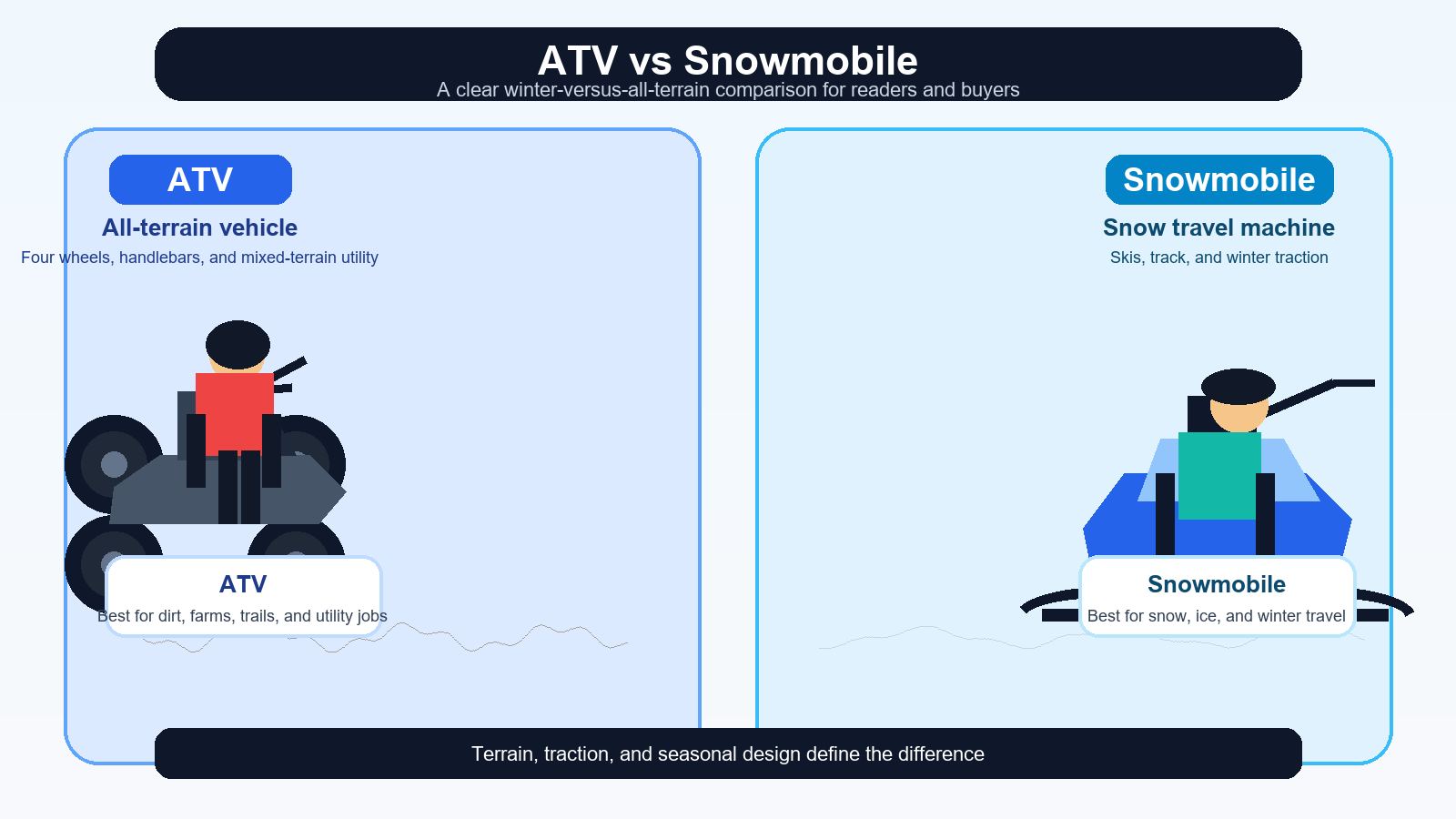
Quick answer: an ATV is built for mixed ground like dirt, gravel, trails, farms, and light utility work, while a snowmobile is built for snow and ice. They look similar in the sense that both are off-road machines, but their steering, traction, suspension, and best-use environments are very different.
This article is for riders, buyers, and outdoor operators who want a practical comparison before choosing between an ATV and a snowmobile. If you are deciding what to buy for recreation, work, or seasonal travel, understanding the difference will save money and prevent the wrong purchase.
In this guide, you will learn:
- What makes an ATV different from a snowmobile
- Which machine performs better in specific terrain
- How safety, maintenance, and cost compare
- Which one fits your use case best
What Is an ATV?
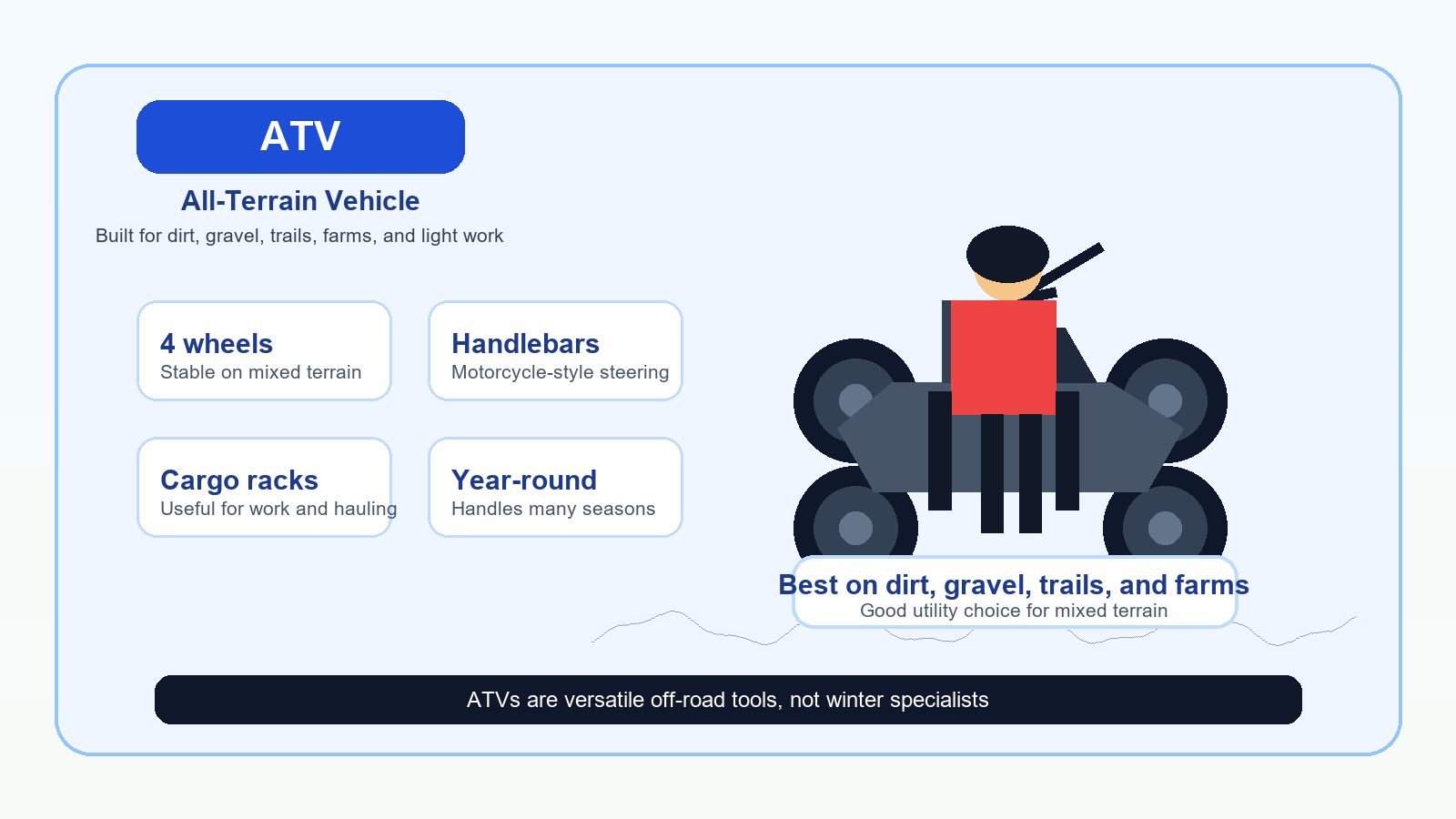
An ATV, or all-terrain vehicle, is a four-wheeled off-road vehicle designed for uneven ground. Riders usually sit astride the machine and steer with handlebars, which gives the vehicle a motorcycle-like feel with much more stability. ATVs are commonly used on farms, job sites, wooded trails, hunting routes, and recreational dirt paths.
The key strength of an ATV is versatility. It can move across dirt, grass, mud, gravel, and light snow, depending on tire design and conditions. Many models also support racks, towing, and utility attachments, which makes them useful for work as well as fun.
What Is a Snowmobile?
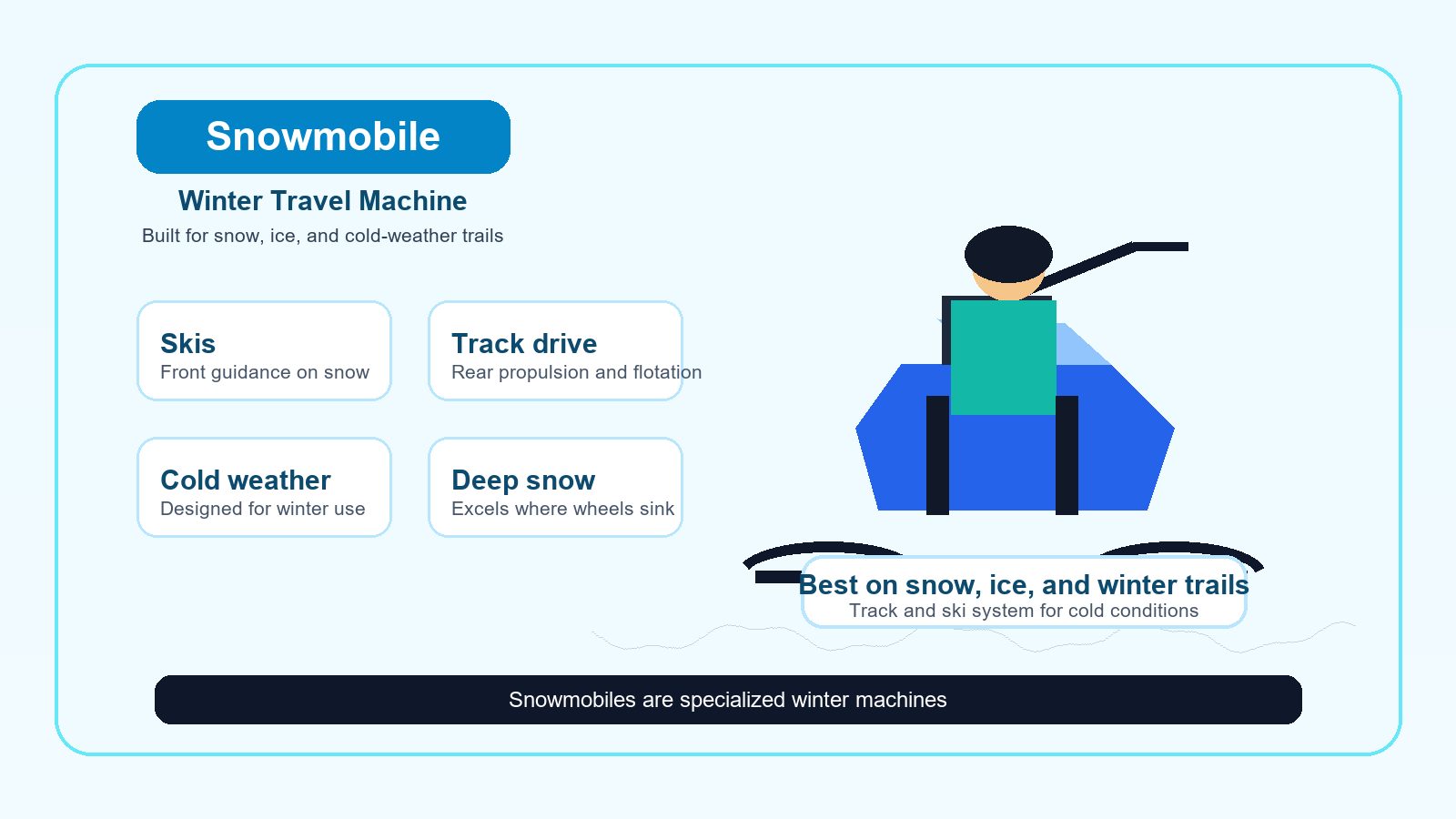
A snowmobile is a winter vehicle built specifically to travel over snow. Instead of wheels, it uses skis in front and a track in the rear to create floatation and traction on soft or packed snow. Riders sit on a seat and steer using handlebars, but the entire chassis is tuned for cold-weather operation.
Snowmobiles are not meant to replace ATVs. They excel in deep snow, frozen lakes, winter trails, and remote northern environments where wheels would sink or lose grip. Their design is seasonal by nature, which is why they perform so well in winter but are poor choices for dry land or warm-weather terrain.
ATV vs Snowmobile: The Core Differences
The biggest difference is the surface each machine was built to handle. An ATV depends on tires and ground clearance. A snowmobile depends on skis, a drive track, and low-friction snow contact. That one design choice changes almost everything else.
| Feature | ATV | Snowmobile |
|---|---|---|
| Best terrain | Dirt, gravel, farms, trails | Snow, ice, winter trails |
| Traction system | Four tires | Front skis + rear track |
| Seasonality | Year-round | Primarily winter |
| Work use | Common | Limited |
| Passenger feel | Stable and heavy | Light and fast in snow |
ATVs are generally more practical for mixed-use buyers because they can operate in more seasons and more environments. Snowmobiles are specialized tools. When the ground is covered in snow, they are often the superior option, but outside winter they lose most of their advantage.
Which One Is Better for Recreation?
If your goal is weekend adventure and you ride on forests, hills, fields, or farm roads, an ATV is usually the better all-around choice. It is easier to use for varied terrain and can still handle light winter conditions with proper tires and caution.
If your idea of fun is winter speed, open snowfields, mountain snow trails, and cold-weather exploration, a snowmobile is the clear winner. It is far more enjoyable and far safer than an ATV in deep snow because the machine was engineered for that exact environment.
Which One Is Better for Work?
For utility work, the ATV usually wins. Farmers, property managers, ranchers, and landowners often need a vehicle that can tow, carry tools, and move in multiple seasons. ATVs are also easier to store and more flexible across the year.
A snowmobile can be useful for winter patrol, remote access, or rescue-style operations, but those are narrow use cases. If the machine needs to earn its keep in more than one season, the ATV is the more practical investment.
Safety and Handling
Both machines require training and protective gear. ATVs can roll if ridden aggressively or on unstable terrain, especially when a rider shifts weight poorly or carries cargo badly. Snowmobiles can also be dangerous if ridden at high speed on unfamiliar ice, steep slopes, or low-visibility trails.
The best safety rule is simple: match the vehicle to the terrain. Do not use an ATV as a snowmobile substitute in deep winter, and do not expect a snowmobile to be useful on dry ground. Each machine is safe when used the way it was designed to be used.
Cost, Maintenance, and Ownership
ATVs usually offer lower ownership complexity because they are easier to use year-round and parts are widely available. Snowmobiles can be more seasonal, which means storage, winter prep, and offseason maintenance matter more.
Fuel use, insurance, trailers, and riding gear also affect total cost. The right choice is not only about purchase price. It is about how often you will use the machine, where you will store it, and whether your environment matches its design.
How to Choose the Right One
Choose an ATV if you want a single vehicle that can handle utility, recreation, and mixed terrain. Choose a snowmobile if your riding season is dominated by snow and you want a machine built for winter traction and speed.
A simple rule works well: if the ground is the problem, buy an ATV; if snow is the problem, buy a snowmobile. That way, you are choosing the vehicle that solves the right transportation challenge.
Buying New vs Used
When buying an ATV or snowmobile, condition matters more than cosmetics. A used ATV with a clean frame, good suspension, and documented maintenance may be a smart buy because parts and service are widely available. The same is true for a snowmobile, but winter machines can be harder to inspect because wear may hide in the track, skis, clutches, or cold-start behavior.
If you are shopping used, look for service records, frame damage, uneven tire wear or track wear, and signs of hard riding. A carefully maintained machine often delivers better value than a newer but abused one.
Terrain and Climate Should Decide
The most reliable way to choose is to start with your environment. If you live where snow lasts for months, a snowmobile can open up travel and recreation that an ATV simply cannot match. If you live in a region with dirt roads, trails, fields, mud, and only occasional snow, the ATV is almost always the better investment.
That is why the question is not just "Which machine is better?" It is "Which machine fits the conditions I actually ride in?" Once you answer that, the decision becomes much easier.
Common Mistakes to Avoid
- Buying a snowmobile when you really need an all-season utility vehicle
- Using an ATV in deep snow and expecting snowmobile performance
- Ignoring helmet, gloves, boots, and riding training
- Choosing by appearance instead of terrain and use case
Frequently Asked Questions
Is an ATV the same as a snowmobile?
No. An ATV uses wheels and is built for mixed ground. A snowmobile uses skis and a track and is built for snow travel.
Can an ATV be used in snow?
Yes, but only in limited conditions. Light snow is possible with the right tires, but deep snow is where a snowmobile performs much better.
Which is safer for beginners?
That depends on the terrain. In dry or mixed terrain, an ATV is often easier to understand. In winter snow conditions, a snowmobile is the safer match because it is built for that surface.
Which one is more versatile?
An ATV is more versatile because it can be used across more seasons and on more types of terrain.
Conclusion
The difference between an ATV and a snowmobile comes down to design purpose. ATVs are multipurpose off-road machines for dirt, trails, farms, and utility work. Snowmobiles are specialized winter vehicles for snow and ice. If you want year-round flexibility, choose an ATV. If you want the best winter machine possible, choose a snowmobile.
Next step: pick the machine that fits your terrain first, not the one that looks more exciting on paper.
Sources and further reading: Google Search Central helpful content guidance, CPSC ATV safety guidance, and snowmobile industry safety resources.