
Who Should Buy a Gasoline ATV? A Practical Buyer's Guide
Who should buy a gasoline ATV? A practical buyer's guide for farms, ranches, hunting, outdoor work, and utility fleets — plus clear dealer stocking advice.
Who Should Buy a Gasoline ATV? A Practical Buyer's Guide
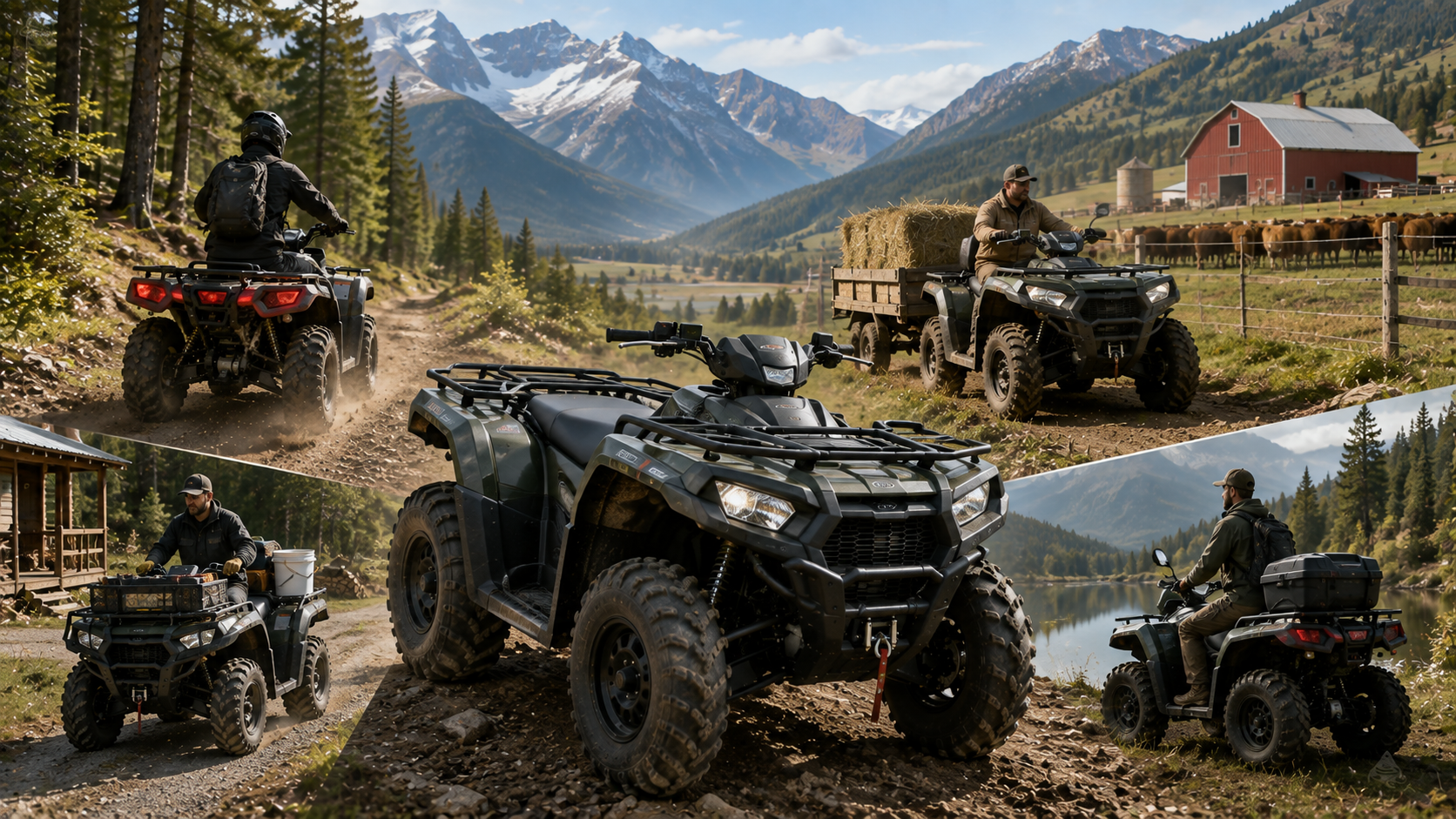
Who should buy a gasoline ATV? It is the first question most B2B buyers ask when planning an order, because the answer shapes engine size, drivetrain, and spare parts depth. A gasoline ATV earns its place wherever work happens far from a power outlet — farms, ranches, hunting grounds, construction staging areas, and managed properties. For importers, dealers, and OEM sourcing teams, understanding the gasoline ATV buyer is not academic; it determines which models move off the lot and which sit in inventory. This guide profiles the six core buyer personas, the specifications each one actually needs, and the buying signals that let you identify them across the counter or inside a tender document.
The Short Answer: Who Should Buy a Gasoline ATV?
Broadly, the gasoline ATV buyer falls into six recognizable segments:
- Small farm owners and operators who treat the machine as rolling infrastructure.
- Ranchers and livestock managers who ride long daily loops over rough terrain.
- Hunters who need quiet, reliable access to remote areas and help moving game.
- Outdoor workers and property managers maintaining land, trails, and facilities.
- Utility fleets and rental operations that standardize on proven, serviceable units.
- Dealers, importers, and OEM sourcing teams that stock and supply all of the above.
If the buyer's profile is work-first, range-hungry, and remote, a gasoline ATV is almost always the right recommendation. If the route is short, paved, and predictable, an electric model may serve — but the gasoline ATV buyer still values refueling speed, cold-weather reliability, and field repairability most.
Buyer Persona 1: Small Farm Owners and Operators
Small farm owners are the largest single segment of the gasoline ATV market, and the easiest to identify: their machine is a tool, not a toy. They buy on utility, keep the unit for years, and judge it by how many chores it removes from the daily list. This classic ATV for farm use case drives steady demand across most markets.
How Small Farms Actually Use an ATV
- Fence checks and gate repairs across fields.
- Hauling feed bags, seed, tools, and harvested produce between sheds and paddocks.
- Towing light trailers, sprayers, and small implements.
- Orchard, grove, and vineyard work where tractors are too large.
- Moving equipment between buildings and responding to breakdowns quickly.
The pattern is stop-and-go duty: short trips, frequent loading, constant idling. That favors a utility engine tuned for low-end torque rather than top speed, because the buyer measures performance in payload delivered per tank, not kilometers per hour.
Specs That Matter for Farm Work
- Engine size: 300–500 cc utility engines offer the right balance of torque, weight, and running cost for loaded hauling.
- Drivetrain: 4WD with a selectable differential lock is the safe default; 2WD only suits flat, compact holdings.
- Racks and hitch: front and rear racks rated for roughly 100–150 kg, plus a hitch capable of towing a small trailer.
- Ground clearance and tires: around 25–30 cm of clearance with aggressive tread for soft field conditions.
- Serviceability: accessible oil filters, air filters, and drain plugs that do not require dealer-only tools.
Buying signals: the small farm owner asks about payload, towing capacity, fuel consumption, service intervals, and parts availability before anything else. If those questions come first, you are talking to a utility buyer, not a recreation buyer.
Buyer Persona 2: Ranchers and Livestock Managers
Ranchers and livestock managers run the highest mileage of any persona in this guide. Their loops are measured in kilometers per day rather than trips per week: pasture checks at dawn, salt and mineral distribution, hay and water deliveries, fence repairs in the back forty, and moving stock when weather turns. For them, the gasoline ATV is a daily replacement for a pickup truck — so they spec it accordingly.
The Daily Ranch Workload
A working ranch machine can log several thousand kilometers in a single season, much of it at low speed over rocks, mud, and steep grades. That workload stresses brakes, drivetrain, and cooling far more than speed ever would. Ranchers also operate in extremes: freezing starts in winter and dust-choked air in summer, so cold-start reliability and easy air-filter access rank high on their checklist. Ranch machines are resold through the community, so durability reputation travels fast.
Preferred Specs for Ranch Duty
- Engine size: 400–700 cc with high/low range gearing for loaded climbing and controlled descent.
- Drivetrain: 4WD is effectively mandatory, with a differential lock for mud and steep slopes.
- Payload: heavy-duty racks rated for feed sacks and a rear hitch for trailers and small implements.
- Cold weather: reliable cold starts — check whether the engine is carbureted or EFI and how the market's winters treat each.
Buying signals: ranchers ask about durability, maintenance cost, brake life, and how the machine handles a loaded trailer on a grade. They rarely ask about speed or styling. They also buy in clusters — one satisfied rancher typically brings two or three neighbors with him.
Buyer Persona 3: Hunters and Outdoor Recreationists
Hunters form the most seasonal segment of the gasoline ATV market, but also one of the most loyal. Their purchase is emotional and practical at once: the machine must be quiet enough not to spook game, reliable enough to get them out of the backcountry, and capable of carrying gear and game out. This ATV for hunting use case creates a predictable demand spike before hunting season opens.
Access, Game Transport, and Quiet Operation
The hunter's route is rarely a road. It is a logging track, a flooded field edge, or a ridgeline trail at first light. Access is the primary job, and game transport is the second: a full-size deer or comparable large game animal must ride on a rack or be dragged by a winch. Noise discipline matters more here than in any other segment, and so does cargo organization — rifles, bows, and packs need secure mounting points.
Specs That Fit the Hunt
- Engine size: 300–500 cc balances adequate power with manageable noise and weight.
- Drivetrain: 4WD is preferred for mud season and steep draws; 2WD entry models suit flat, dry terrain.
- Quiet operation: a well-muffled exhaust and smooth driveline matter as much as horsepower.
- Cargo: front and rear racks, plus accessory mounting points for gun and bow carriers.
- Winch and reverse: a winch for retrieval and a solid reverse gear for maneuvering in tight cover.
Buying signals: hunters ask about noise, ground clearance, cargo space, and winch compatibility. They respond strongly to proof-of-use content — real riders on real terrain — because their buying decision is partly aspirational.
Buyer Persona 4: Outdoor Workers and Property Managers
Outdoor workers and property managers sit between recreation and agriculture: land managers, park maintenance crews, arborists, campground operators, surveyors, and facility teams that look after large grounds. Their machine must carry tools all day and look presentable in front of visitors. This segment matches the ATV target customer definition used in municipal and commercial tenders.
- Workload: hauling tools, brush, and supplies; towing trailers; patrolling large sites.
- Preferred spec: 400–600 cc utility models with dump beds or flat racks, a tow hitch, and 4WD for wet ground.
- Operating conditions: mixed terrain, frequent stops, and all-season duty, so low upkeep and easy cleaning win.
- Fleet behavior: these buyers standardize on one model across the team to simplify training and parts.
Buying signals: property managers buy through formal quotes, ask about payload ratings and towing certification in writing, and want documentation they can file. Deliverability and after-sales support often decide the order as much as price.
Buyer Persona 5: Utility Fleets and Rental Operations
Utility fleets and rental operations are the highest-volume gasoline ATV buyers in the wholesale channel. They do not buy one machine; they buy five, ten, or fifty, and they treat the purchase as a capital decision with a payback calculation. A rental unit that breaks down costs revenue twice — once in lost rental days, once in maintenance.
- Standardized specification: one engine size and drivetrain across the fleet to keep spare parts and training simple.
- Parts commonality: wear items shared across models shorten downtime and cut inventory cost.
- Serviceability: service points accessible without specialist tools, and documentation that a local mechanic can follow.
- Resale value: fleets budget for a defined service life and a predictable resale curve.
- Support network: reliable spare parts supply and realistic export lead times from the supplier matter as much as the unit price.
Buying signals: fleet buyers talk in units and hours — unit count, operating hours per day, uptime targets, and service contracts. When a buyer starts asking about parts kits and lead times before price, you are in fleet territory.
Buyer Persona 6: Dealers, Importers, and OEM Sourcing Teams
The dealer and importer is both a buyer and a channel, and the smartest run their stocking strategy from the ATV use cases and personas above. Regional terrain, climate, and season decide which models will move: hilly, muddy regions justify 4WD-dominant stock, while flat, dry markets can carry more 2WD entry units. Hunting season lifts demand for mid-size 4WD models with winches; harvest season lifts demand for utility models with heavy racks.
- Stock the three engine tiers: an entry tier around 250–300 cc, a mid utility tier around 400–500 cc, and a heavy tier around 570–700 cc.
- Weight the mix toward 4WD: most markets clear 4WD faster than 2WD, even where terrain is mild, because buyers perceive it as future-proof.
- Carry parts depth, not just machines: common wear items — filters, pads, tires, winch cables — are the second sale and the loyalty driver.
- Match landing cost to local price points: evaluate freight, duties, and typical export lead times from your supplier against the price your market will bear.
Buying signals: importers and dealers ask about landing costs, minimum order quantities, lead times, packaging, documentation, and compliance requirements. If you are the supplier, a dealer who asks these questions early is worth more than one who only negotiates price.
Quick Reference: Which Gasoline ATV for Which Buyer?
| Buyer persona | Typical engine size | Drivetrain preference | Must-have features | Strongest buying signals |
|---|---|---|---|---|
| Small farm owner | 300–500 cc | 4WD with diff lock | Utility racks, hitch, winch-ready, 25–30 cm clearance | Payload, towing, fuel use, service intervals |
| Rancher / livestock manager | 400–700 cc | 4WD, high/low range | Heavy-duty racks, strong brakes, cold-start reliability | Durability, daily mileage, maintenance cost |
| Hunter | 300–500 cc | 4WD preferred, 2WD entry | Quiet exhaust, cargo racks, winch, reverse | Noise, ground clearance, cargo space |
| Outdoor worker / property manager | 400–600 cc | 4WD | Dump bed or flat racks, tow hitch, low upkeep | Payload ratings, towing certification, documentation |
| Utility fleet / rental | 400–700 cc | 4WD, standardized spec | Parts commonality, serviceability, resale value | Unit count, uptime targets, service contracts |
| Dealer / importer / OEM | Mixed, three tiers | 4WD-dominant mix | Balanced model mix, parts depth, documentation | Landing cost, lead time, regional demand |
Why Gasoline Keeps Winning for Work-First Buyers
Electric models get the headlines; gasoline gets the work done. Refueling takes minutes almost anywhere, while charging depends on infrastructure the work site may not have. Cold weather barely penalizes a properly maintained gasoline engine, and a competent local mechanic can repair one without special electronics. Fuel cost and routine service are predictable — exactly what a B2B buyer wants from a capital purchase.
How Dealers Can Identify the Right Customers and Stock the Right Models
For dealers and importers, the question "who should buy a gasoline ATV" translates into a daily screening exercise. Four signals separate the serious buyer from the browser:
- The questions they ask: payload and towing questions mean utility; noise and styling questions lean recreational.
- The terrain they describe: mud, hills, and snow point to 4WD; flat, dry ground opens the 2WD conversation.
- Usage frequency: daily duty justifies a heavier spec; weekend use accepts a lighter one.
- Existing fleet and budget: returning fleet customers buy parts and service first, then machines.
On the stocking side, match inventory to the local persona mix. A farm-and-ranch region should carry the 400–700 cc 4WD tier deep and keep heavy-duty racks and winches in stock. A hunting region needs mid-size 4WD models with quiet exhausts ahead of the season. Finally, never stock a machine without the parts that keep it running; the parts counter is where repeat customers are made.
FAQ: Gasoline ATV Buying Questions
Who should buy a gasoline ATV instead of an electric model?
Buyers whose work is remote, long-distance, cold-weather, or load-heavy should choose gasoline: farmers, ranchers, hunters in the backcountry, outdoor workers, and utility fleets. Gasoline suits anyone who cannot depend on charging infrastructure, needs minutes-long refueling, and wants field-repairable machines. Electric models suit short, predictable routes with charging available.
What engine size should a first-time gasoline ATV buyer choose?
A first-time utility buyer should start in the 300–500 cc range: enough torque for loaded work, light enough to handle confidently, and cheaper to run than a heavy machine. Beginners who plan mostly trail riding can step down to the 250–300 cc entry tier, while buyers with daily heavy hauling should move up to 400–700 cc.
Is 2WD enough, or should buyers choose 4WD?
2WD is enough only for flat, dry, maintained ground with light loads. For farm, ranch, and hunting use — mud, slopes, snow, and loaded hauling — 4WD is the practical choice and the one that holds resale value. Most dealers find that offering 4WD as the default and 2WD as the budget entry protects both the customer and the inventory.
What maintenance does a gasoline ATV realistically need?
Routine care is straightforward: oil and filter changes per the service schedule, air filter cleaning or replacement, chain or belt checks, brake inspection, and tire pressure checks. Machines used hard in dust or mud need shorter service intervals. Most owners maintain their own units, and fleets standardize on common wear parts to control cost.
What should a dealer stock to serve gasoline ATV buyers?
Stock three engine tiers — roughly 250–300 cc, 400–500 cc, and 570–700 cc — with a 4WD-dominant mix, and tune the balance to local terrain and seasons. Carry common wear parts for every model on the floor, and keep accessories like winches, heavy-duty racks, and hitches in stock.
The Bottom Line for B2B Buyers
Who should buy a gasoline ATV? Anyone whose machine must work reliably all day, far from infrastructure, in any season — and the dealers, importers, and OEM sourcing teams that serve them. Match the persona to the specification: engine size, drivetrain, racks, and serviceability each answer a specific workload, and the buying signals are consistent once you know what to listen for. A well-chosen gasoline ATV is not an expense line; it is rolling infrastructure with a measurable payback, and the market that understands the personas will stock the models that move.