
What Is the Difference Between an ATV and a Side-by-Side?
Both ATV (All-Terrain Vehicle) and side-by-side vehicles (also called UTVs or Utility Task Vehicles) are designed for outdoor driving, rough terrain, farming, recreation, and industrial applications. However, they have significant differences in design, seating capacity, handling, performance, and intended use.
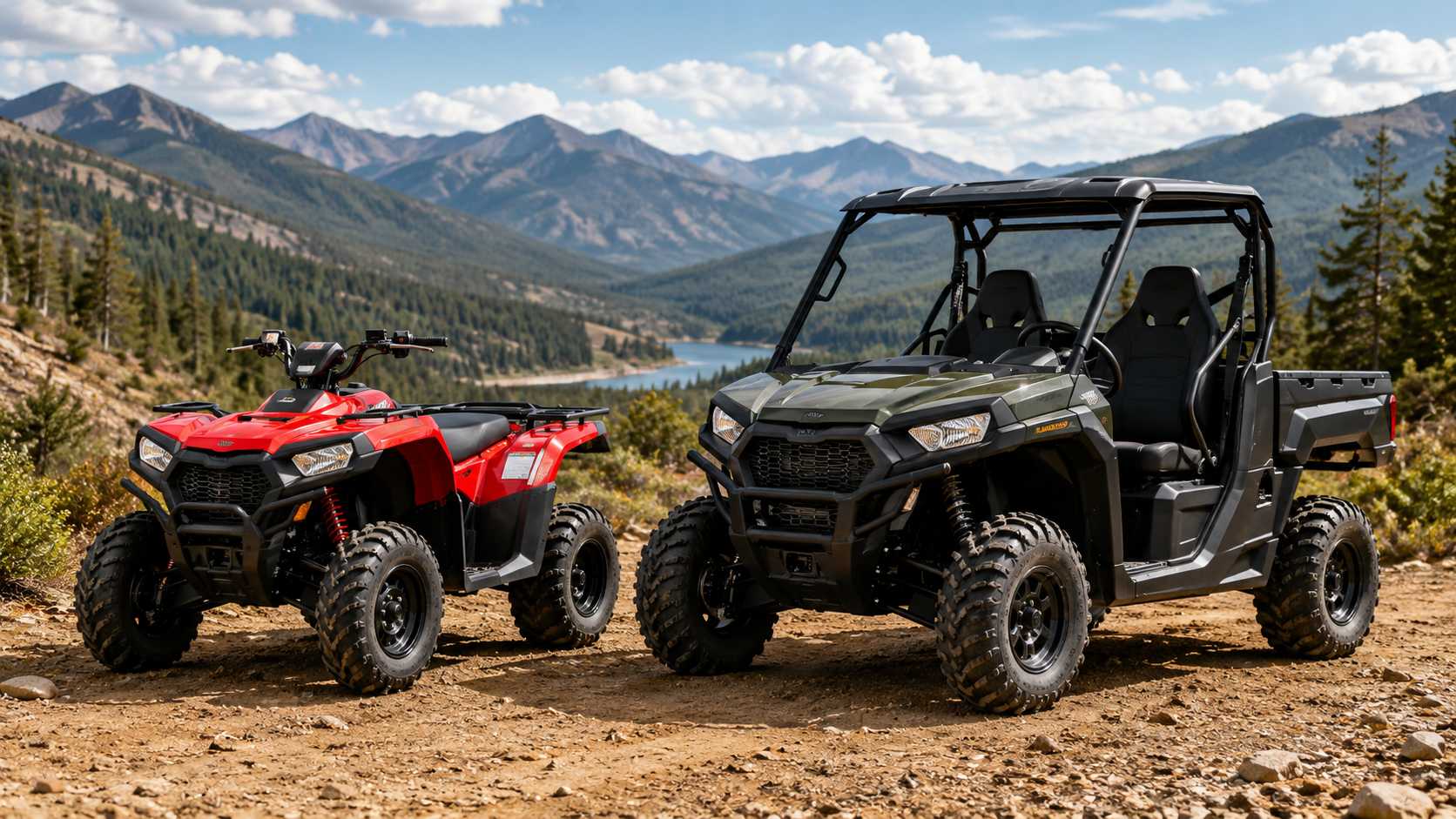
When choosing an off-road vehicle, many buyers often ask: What is the difference between an ATV and a side-by-side?
Both ATV (All-Terrain Vehicle) and side-by-side vehicles (also called UTVs or Utility Task Vehicles) are designed for outdoor driving, rough terrain, farming, recreation, and industrial applications. However, they have significant differences in design, seating capacity, handling, performance, and intended use.
Understanding the differences between these two popular off-road vehicles can help consumers, dealers, and businesses select the right model for their specific needs.
What Is an ATV?
An ATV, short for All-Terrain Vehicle, is a compact four-wheel off-road vehicle designed for single-rider or two-rider operation. ATVs are commonly known as quad bikes, four wheelers, or ATV quad bikes because of their four-wheel structure and motorcycle-style riding position.
Most ATVs feature:
- Handlebar steering system
- Straddle seating position
- Four independent wheels
- Powerful gasoline or electric engines
- Compact body design
- Excellent maneuverability
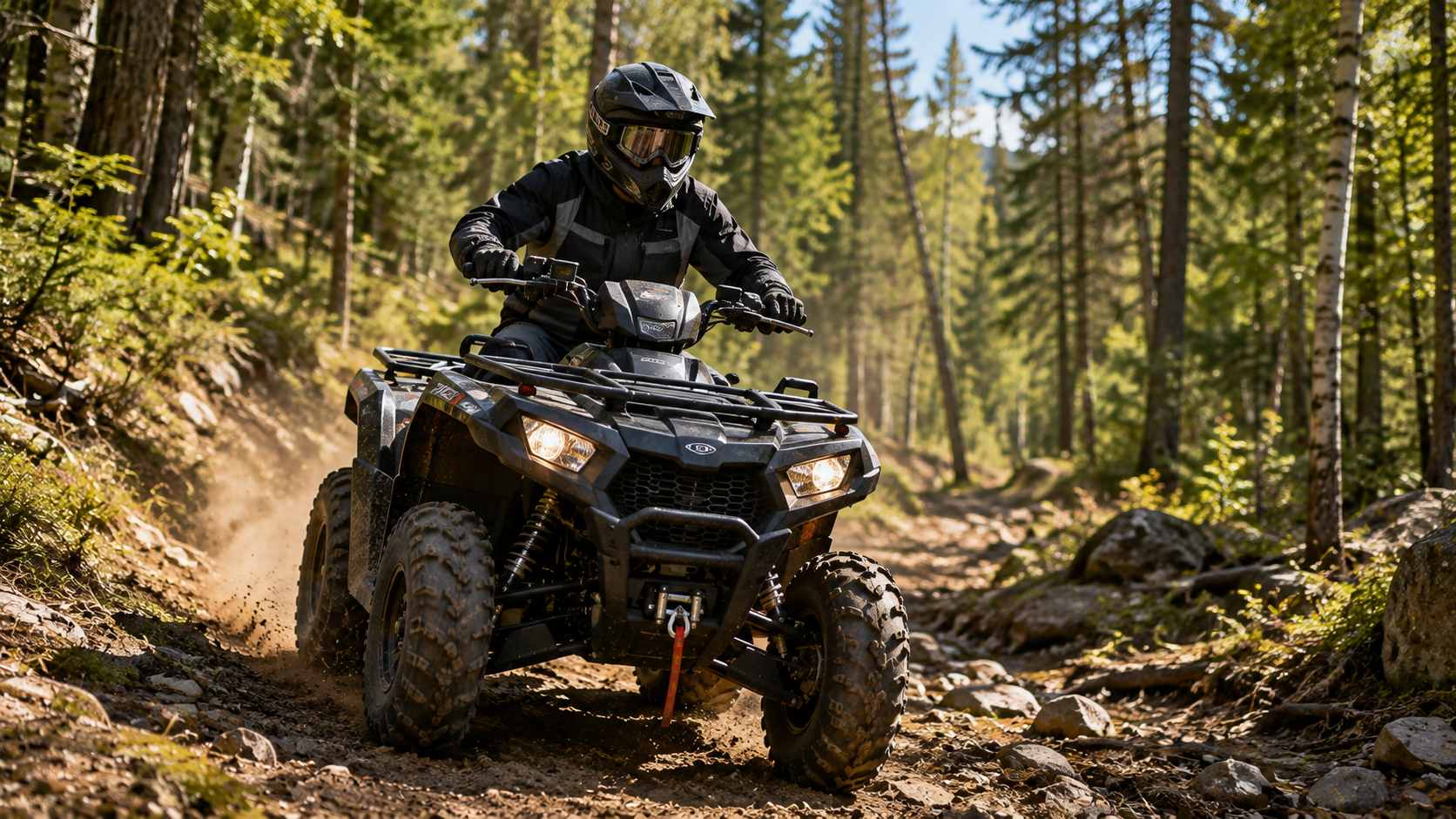
ATVs are popular for recreational riding, outdoor adventures, farming, hunting, and trail exploration.
Because of their lightweight structure and small turning radius, ATVs can easily travel through narrow trails, forests, mud, sand, and rocky terrain where larger vehicles may have difficulty.
What Is a Side-by-Side Vehicle?
A side-by-side vehicle, also known as a UTV (Utility Terrain Vehicle), is a larger off-road vehicle designed with seats positioned next to each other, similar to a small car.
Unlike an ATV, a side-by-side usually includes:
- Steering wheel control
- Driver and passenger seats
- Protective cabin frame
- Seat belts
- Cargo bed options
- Higher load capacity
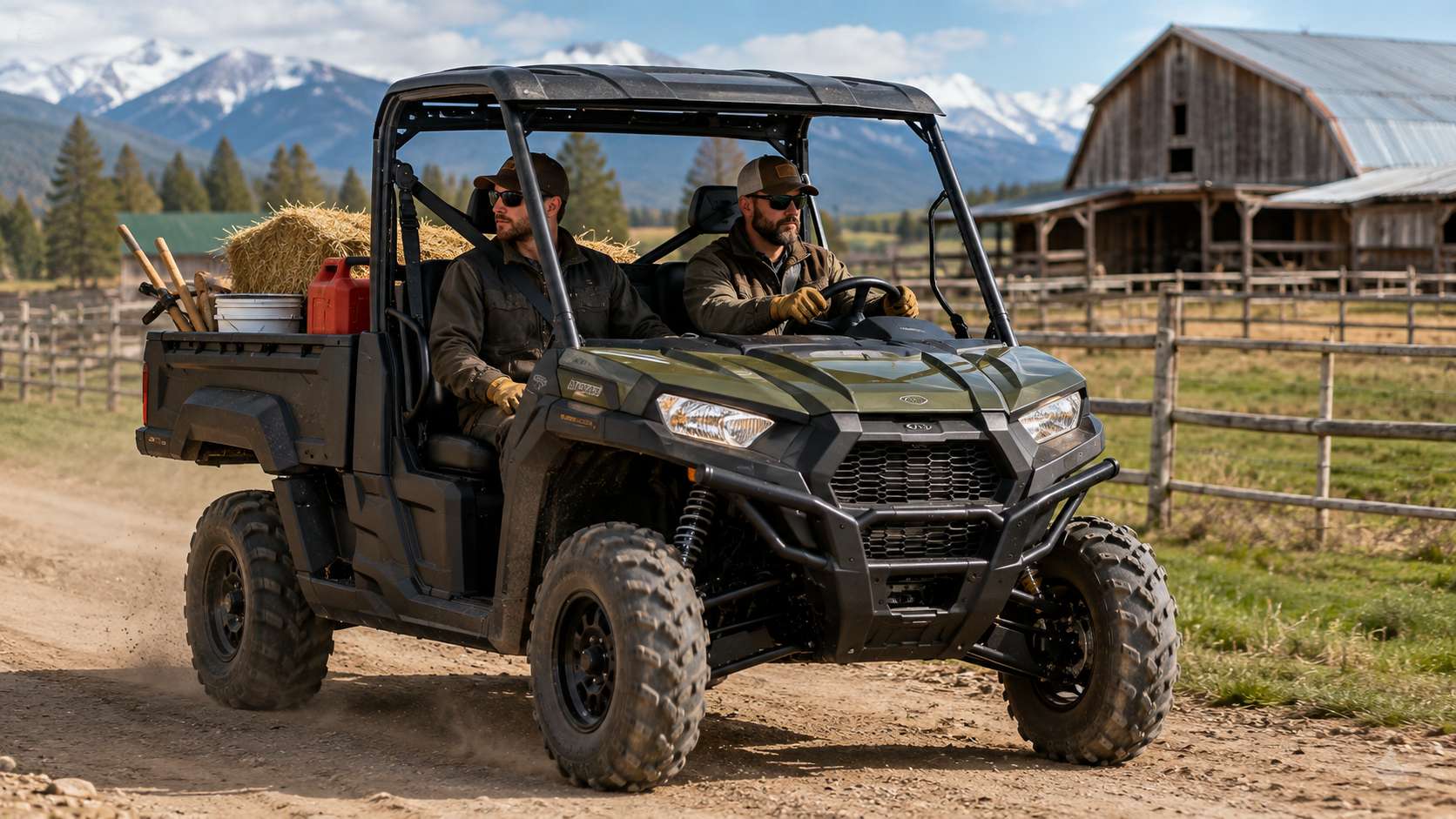
Side-by-sides are commonly used for agricultural work, construction sites, ranch transportation, hunting, and recreational outdoor driving.
Many UTV models are designed to carry multiple passengers and transport equipment, making them ideal for professional applications.
Main Differences Between ATV and Side-by-Side
1. Seating Capacity
The biggest difference between an ATV and a side-by-side is the number of passengers.
A standard ATV usually accommodates:
- One rider
- Sometimes two riders depending on the model
A side-by-side vehicle normally carries:
- Two passengers
- Four passengers
- Six passengers in larger models
For personal riding and adventure sports, an ATV is often enough. For family trips, farming teams, or work applications, a UTV provides better capacity.
2. Driving Experience
ATVs provide a motorcycle-like riding experience. The rider controls the vehicle using handlebars and shifts body weight while turning.
This design gives ATVs:
- Better agility
- Faster response
- Easier trail navigation
- More exciting riding experience
Side-by-side vehicles provide a car-like driving experience with:
- Steering wheel control
- Comfortable seating
- More stability
- Better protection
For beginners or users who prefer easier operation, a UTV may be a better choice.
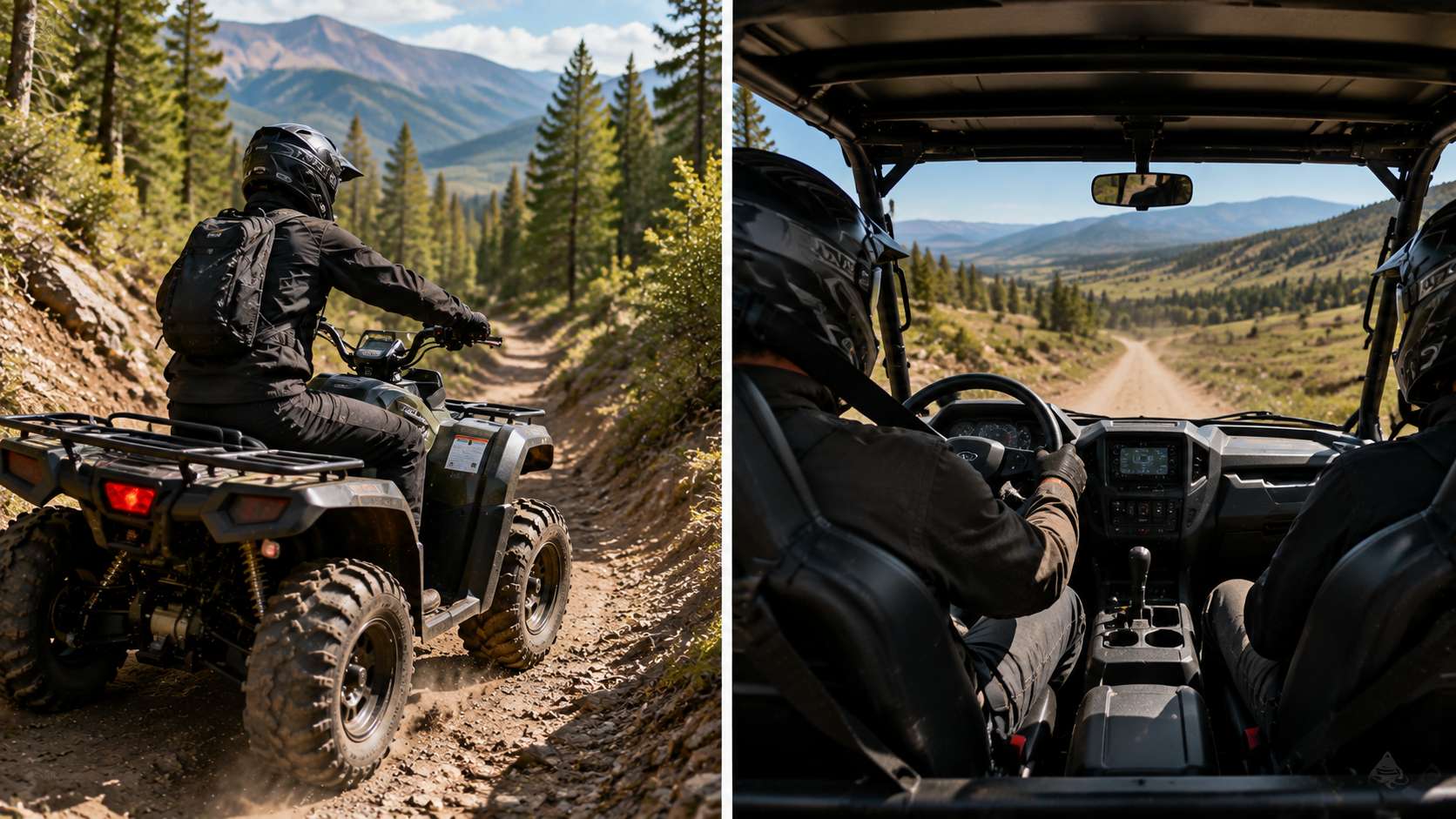
3. Size and Maneuverability
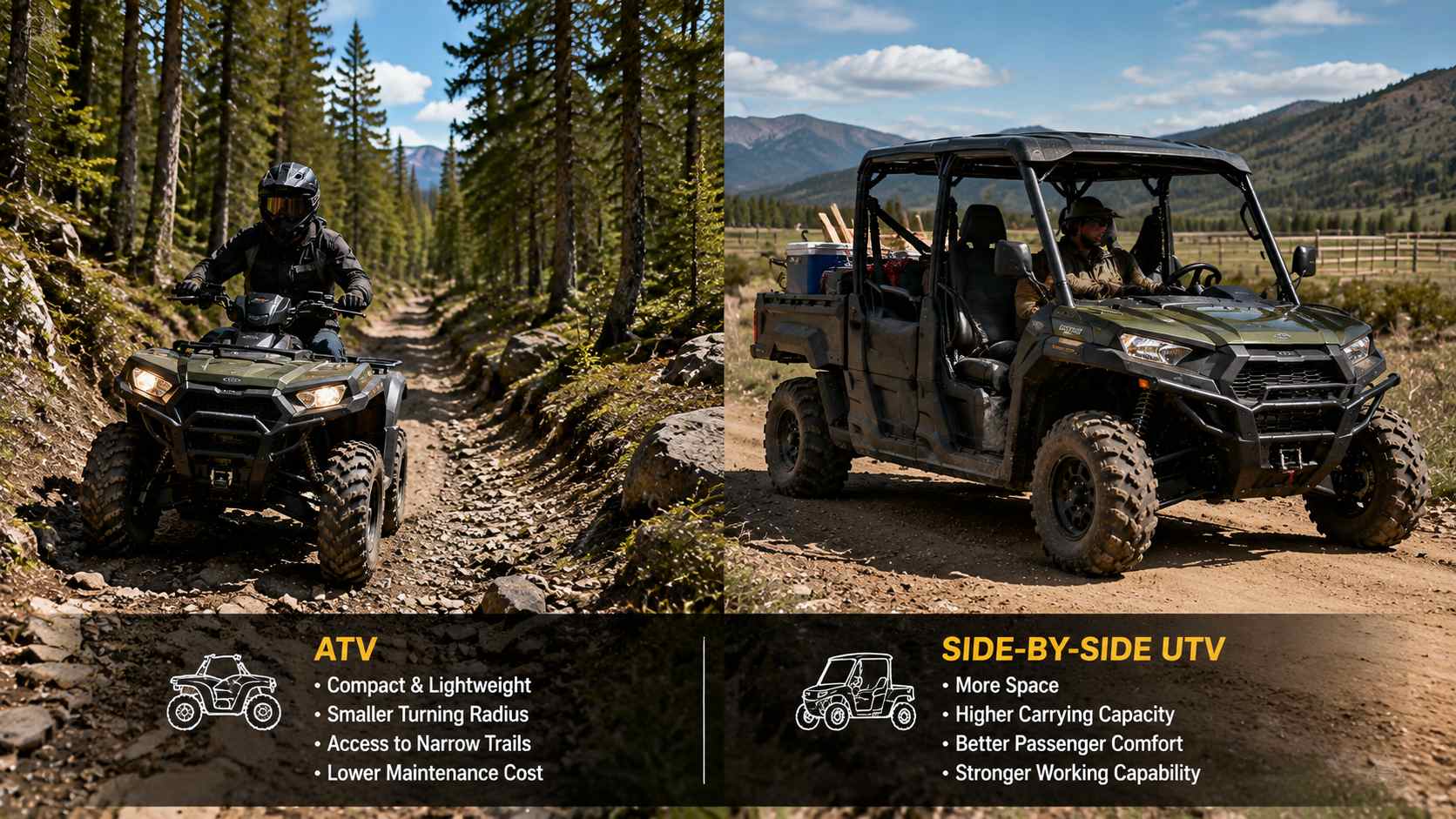
ATVs are smaller and lighter than side-by-side vehicles.
Advantages of ATVs:
- Easy transportation
- Smaller turning radius
- Access to narrow trails
- Lower maintenance cost
Advantages of side-by-sides:
- More space
- Higher carrying capacity
- Better passenger comfort
- Stronger working capability
If you frequently ride in forests, mountain trails, or tight areas, an ATV has an advantage. If you need transportation and utility functions, a side-by-side is more suitable.
4. Performance and Power
Both ATVs and side-by-sides are available with different engine sizes.
Common ATV engine options include:
- 110cc ATV
- 125cc ATV
- 250cc ATV
- 500cc ATV
- 700cc ATV
Side-by-side vehicles usually use larger engines:
- 500cc UTV
- 800cc UTV
- 1000cc UTV
ATVs focus on lightweight performance and maneuverability, while UTVs focus on power, durability, and carrying ability.
ATV vs Side-by-Side: Which One Should You Choose?
The best choice depends on your intended application.
Choose an ATV If You Need:
- Recreational trail riding
- Outdoor adventure
- Hunting exploration
- Easy transportation
- A compact off-road vehicle
- Lower purchase cost
ATVs are especially popular among outdoor enthusiasts who enjoy speed, flexibility, and challenging terrain.
Choose a Side-by-Side If You Need:
- Farming transportation
- Ranch work
- Construction applications
- Passenger transportation
- Carrying tools or cargo
- Long-distance outdoor driving
UTVs are widely used by farmers, workers, and businesses because they combine transportation and utility functions.
Are ATVs and Side-by-Sides Street Legal?
Street legality depends on local laws and regulations.
In many regions:
- ATVs are mainly designed for off-road use
- Side-by-sides may require additional equipment for road use
Before purchasing an ATV or UTV, users should check local requirements regarding:
- Registration
- Insurance
- Safety equipment
- Driving areas
ATV and Side-by-Side Market Applications
The global demand for off-road vehicles continues to grow due to increasing interest in outdoor recreation, agriculture modernization, and utility transportation.
ATVs and UTVs are widely used in:
- Outdoor sports
- Tourism and rental businesses
- Farms and ranches
- Forestry operations
- Mining areas
- Rescue operations
- Property management
For dealers and distributors, both ATV quad bikes and side-by-side vehicles offer strong market opportunities.
Conclusion
The main difference between an ATV and a side-by-side is their design purpose. An ATV is smaller, more agile, and designed for individual off-road adventures. A side-by-side is larger, more comfortable, and built for passengers, cargo transportation, and professional applications.
If you want a lightweight and exciting off-road experience, an ATV quad bike is an excellent choice. If you need a practical vehicle for work, family trips, or heavy-duty tasks, a side-by-side UTV provides more advantages.
Understanding your usage requirements is the key to choosing the right off-road vehicle. Whether selecting an ATV or a side-by-side, both offer excellent performance and versatility for exploring outdoor environments.