
Which Costs Less to Maintain, an ATV or UTV?
When comparing an ATV vs UTV, purchase price is only one part of the decision. For farmers, ranch owners, hunters, recreational riders, rental operators, and commercial buyers, long-term maintenance costs can make a significant difference in total ownership cost.
When comparing an ATV vs UTV, purchase price is only one part of the decision. For farmers, ranch owners, hunters, recreational riders, rental operators, and commercial buyers, long-term maintenance costs can make a significant difference in total ownership cost.
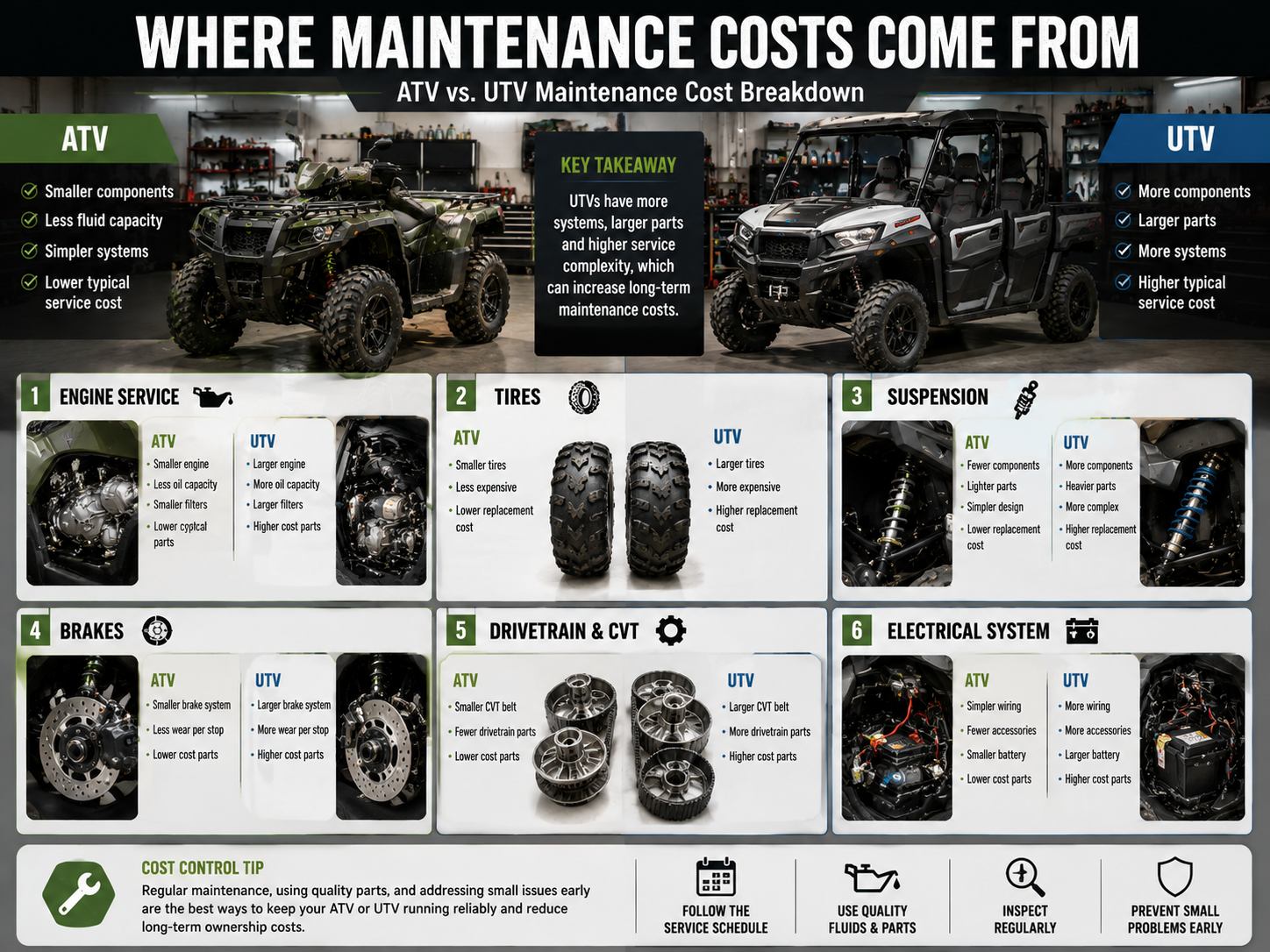
So, which costs less to maintain, an ATV or UTV?
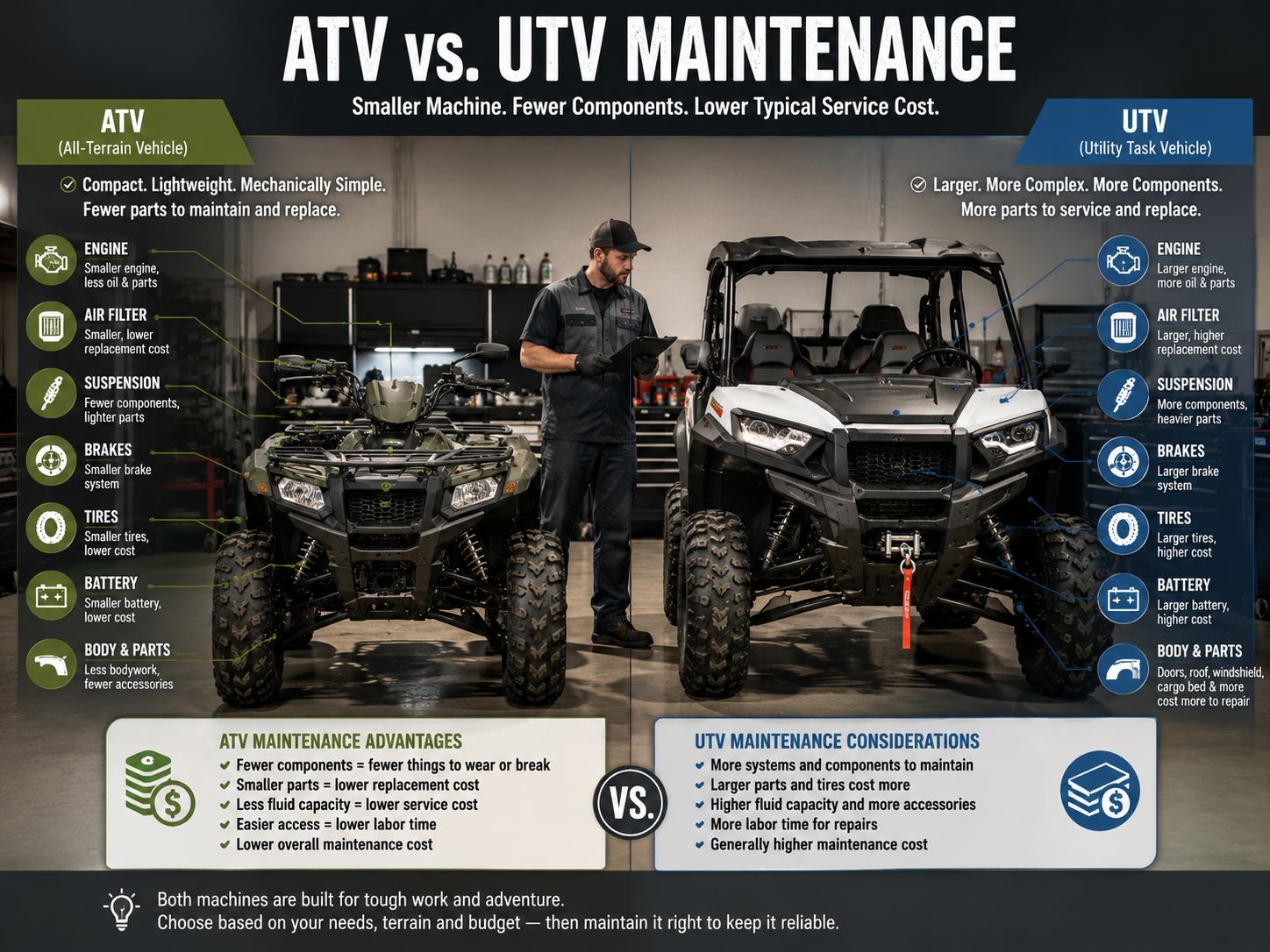
In most cases, an ATV costs less to maintain than a UTV. ATVs are generally smaller, lighter, mechanically simpler, and use fewer or smaller components. They usually require less engine oil, smaller tires, fewer suspension and drivetrain components, and may have lower labor costs when repairs are needed.
A UTV, however, offers advantages that an ATV cannot always match. UTVs generally provide more seats, greater cargo capacity, better passenger comfort, a larger towing capability, and greater utility for certain types of farm, ranch, construction, or commercial work.
Therefore, the better question is not simply:
“Which vehicle is cheaper to maintain?”
It is:
“Which vehicle delivers the lowest total cost for the work I actually need to do?”
This guide compares ATV maintenance cost vs UTV maintenance cost, explains where the biggest expenses come from, and helps buyers choose the right off-road vehicle.
Quick Answer: Is an ATV Cheaper to Maintain Than a UTV?
Generally, yes.
A typical utility ATV has fewer major components and smaller consumable parts than a UTV. This can reduce the cost of routine servicing as well as replacement parts.
ATVs often have:
- Smaller engines
- Lower oil capacity
- Smaller tires
- Fewer seats and interior components
- Less bodywork
- Simpler steering systems
- Smaller brakes
- Lighter suspension components
- Lower overall vehicle weight
A typical utility UTV may include:
- Larger engine
- Larger transmission or CVT system
- Four large tires
- Steering wheel and steering rack
- More complex suspension
- Larger braking components
- Doors
- Windshield
- Roof
- Seats for multiple passengers
- Cargo bed
- More electrical accessories
All of these features provide additional functionality, but they also create more potential maintenance points.
For riders who mainly need a compact off-road vehicle for trail riding, hunting, property inspection, or lighter farm duties, an ATV may therefore provide a lower ownership cost.
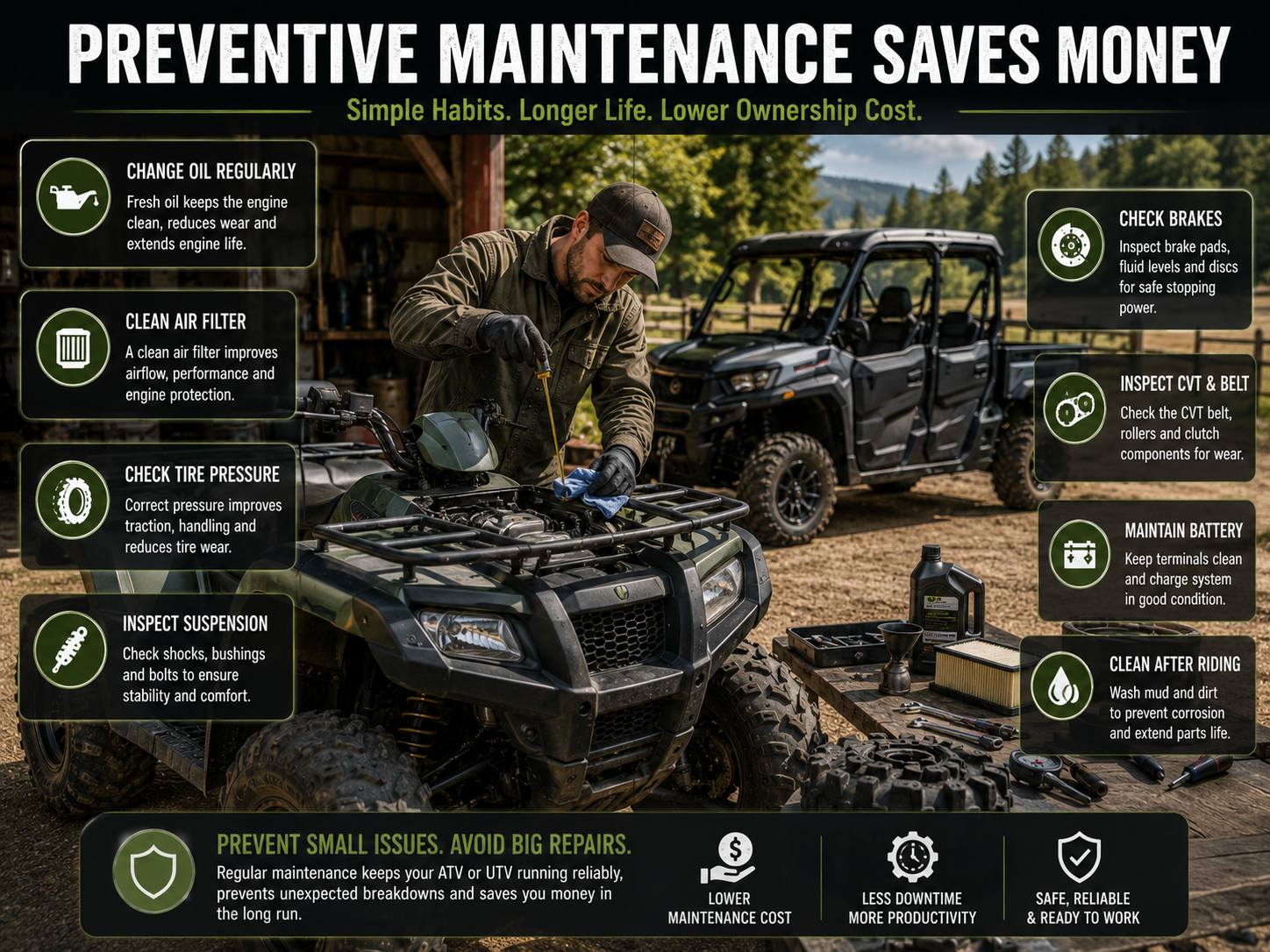
ATV vs UTV: Why Maintenance Costs Are Different
The main reason behind the difference is vehicle complexity.
An ATV is designed around a relatively compact platform. The rider normally sits astride the machine and controls it using handlebars.
A UTV uses an automotive-style layout with a steering wheel, pedals, side-by-side seating, and usually a larger chassis.
That larger chassis means more material and more components.
For example, repairing one damaged ATV body panel may be relatively straightforward.
On a UTV, damage could involve:
- Door panels
- Fender sections
- Windshield
- Roof
- Seat components
- Roll cage accessories
- Cargo bed
- Larger body panels
The same principle applies to suspension and steering.
More components usually mean more potential wear items.