
Who Is an ATV Suitable For, and What Should Buyers Know Before Purchasing?
All-terrain vehicles, commonly known as ATVs or quad bikes, are widely used for outdoor recreation, farming, property maintenance, hunting, trail riding, and utility work. Their compact size and off-road capability allow them to travel across dirt roads, forest trails, fields, mud, sand, and other terrain where conventional vehicles may be less practical.
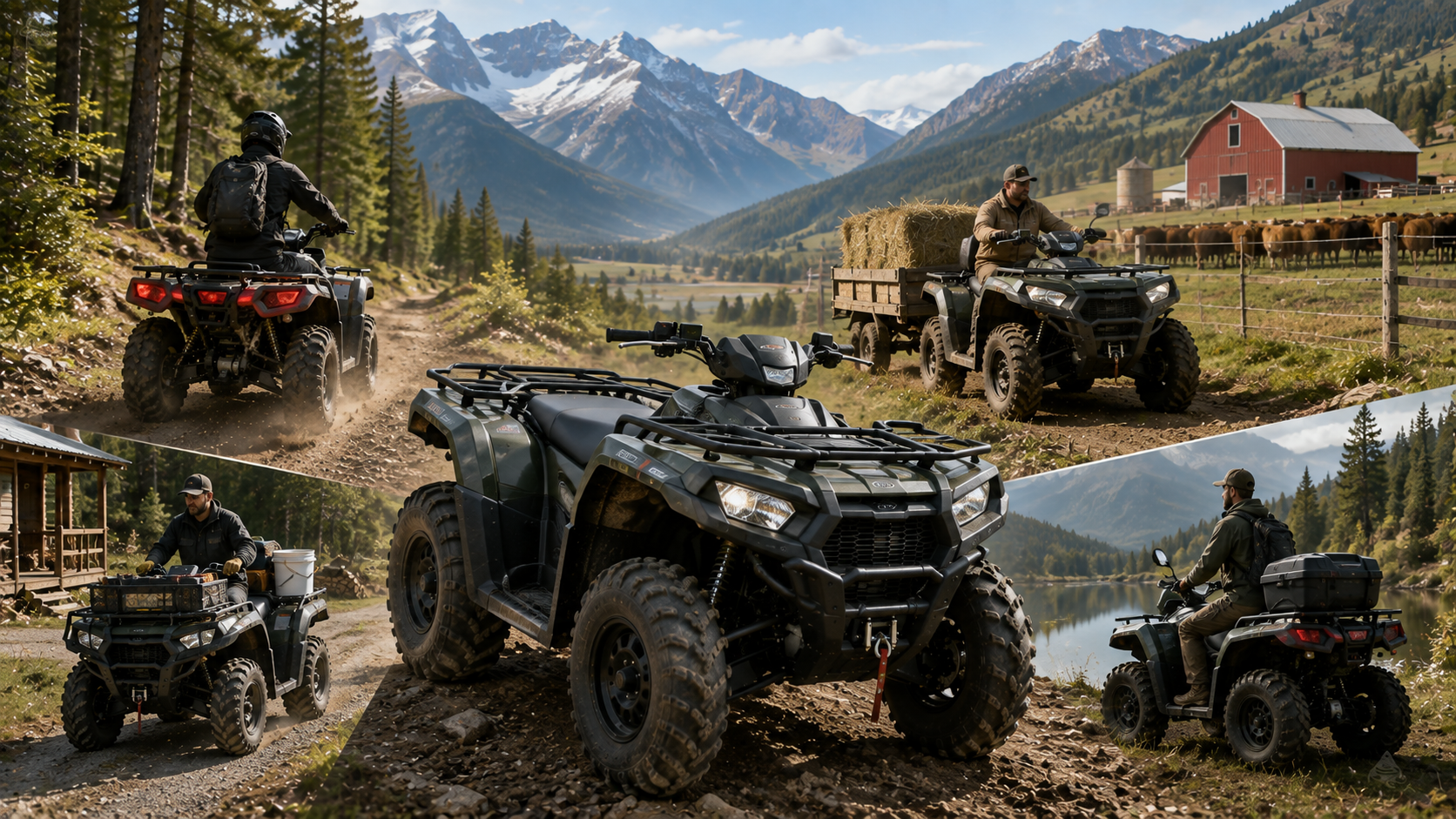
All-terrain vehicles, commonly known as ATVs or quad bikes, are widely used for outdoor recreation, farming, property maintenance, hunting, trail riding, and utility work. Their compact size and off-road capability allow them to travel across dirt roads, forest trails, fields, mud, sand, and other terrain where conventional vehicles may be less practical.
However, not every ATV is designed for the same rider or application. Engine size, drivetrain, transmission, dimensions, suspension, cargo capacity, and other specifications can vary considerably between models.
Before purchasing an ATV, buyers should first understand who the vehicle is intended for and which features are most important for their actual riding environment.
Who Is an ATV Suitable For?
ATVs can serve both recreational and practical purposes. The right vehicle depends primarily on how and where it will be used.
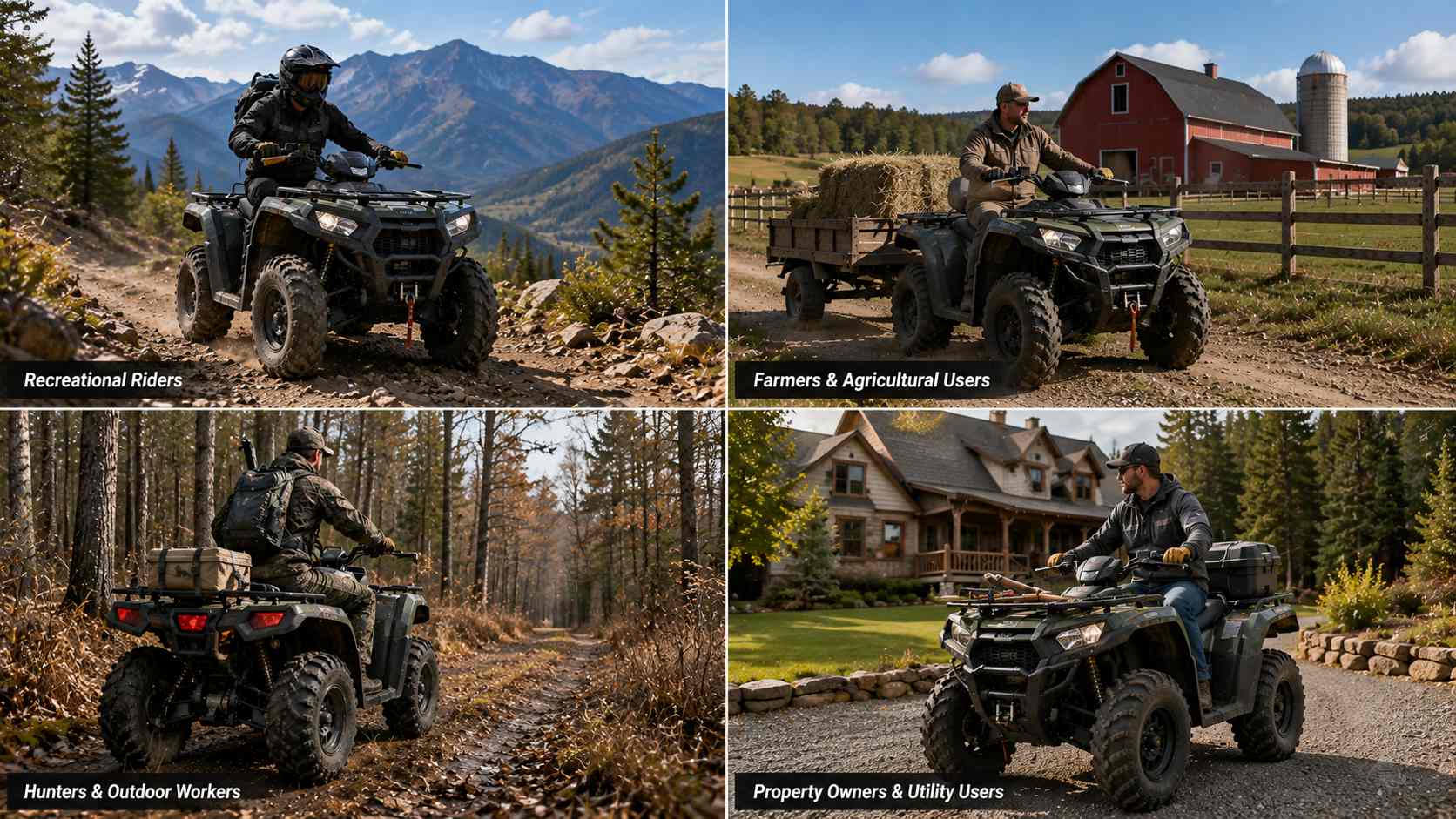
1. Outdoor and Recreational Riders
ATVs are popular among people who enjoy trail riding, camping, outdoor exploration, and recreational off-road driving.
Compared with larger off-road vehicles, a quad bike typically has a compact body and relatively small turning radius. These characteristics can make an ATV suitable for navigating trails and areas where vehicle width matters.
Recreational buyers should consider factors such as handling, suspension, tire design, engine performance, braking, and rider ergonomics rather than choosing a model based only on engine displacement.
2. Farmers and Agricultural Users
ATVs are also commonly used as practical vehicles on farms and rural properties.
A farm ATV can help operators travel between fields, inspect fences, check livestock, transport smaller tools, and reach areas that may be inconvenient for larger agricultural vehicles.
For agricultural applications, buyers may place greater emphasis on durability, low-speed control, cargo racks, towing capability where provided by the manufacturer, drivetrain design, and ease of maintenance.
A recreational ATV and an agricultural ATV may therefore have very different priorities even when their engine sizes are similar.
3. Hunters and Outdoor Workers
Hunters, forestry workers, land managers, and other outdoor professionals may also benefit from an ATV.
A compact all-terrain vehicle can provide transportation across remote properties and unpaved environments while carrying equipment on appropriately designed racks or storage systems.
For these users, traction, ground clearance, tire selection, fuel or battery range, reliability, and available storage are particularly important considerations.
Buyers should always follow the vehicle manufacturer's specified payload and towing limits.
4. Property Owners and Utility Users
People responsible for large properties, ranches, orchards, resorts, or outdoor facilities may use ATVs for routine inspection and maintenance.
Instead of walking long distances or using a full-size vehicle for every task, an ATV can provide a more compact transportation option.
However, buyers who regularly need to transport several passengers or large quantities of cargo should also compare an ATV with a UTV or side-by-side. A UTV generally provides side-by-side seating and greater cargo capacity, while an ATV typically emphasizes compact dimensions and maneuverability.
What Should Buyers Know Before Purchasing an ATV?
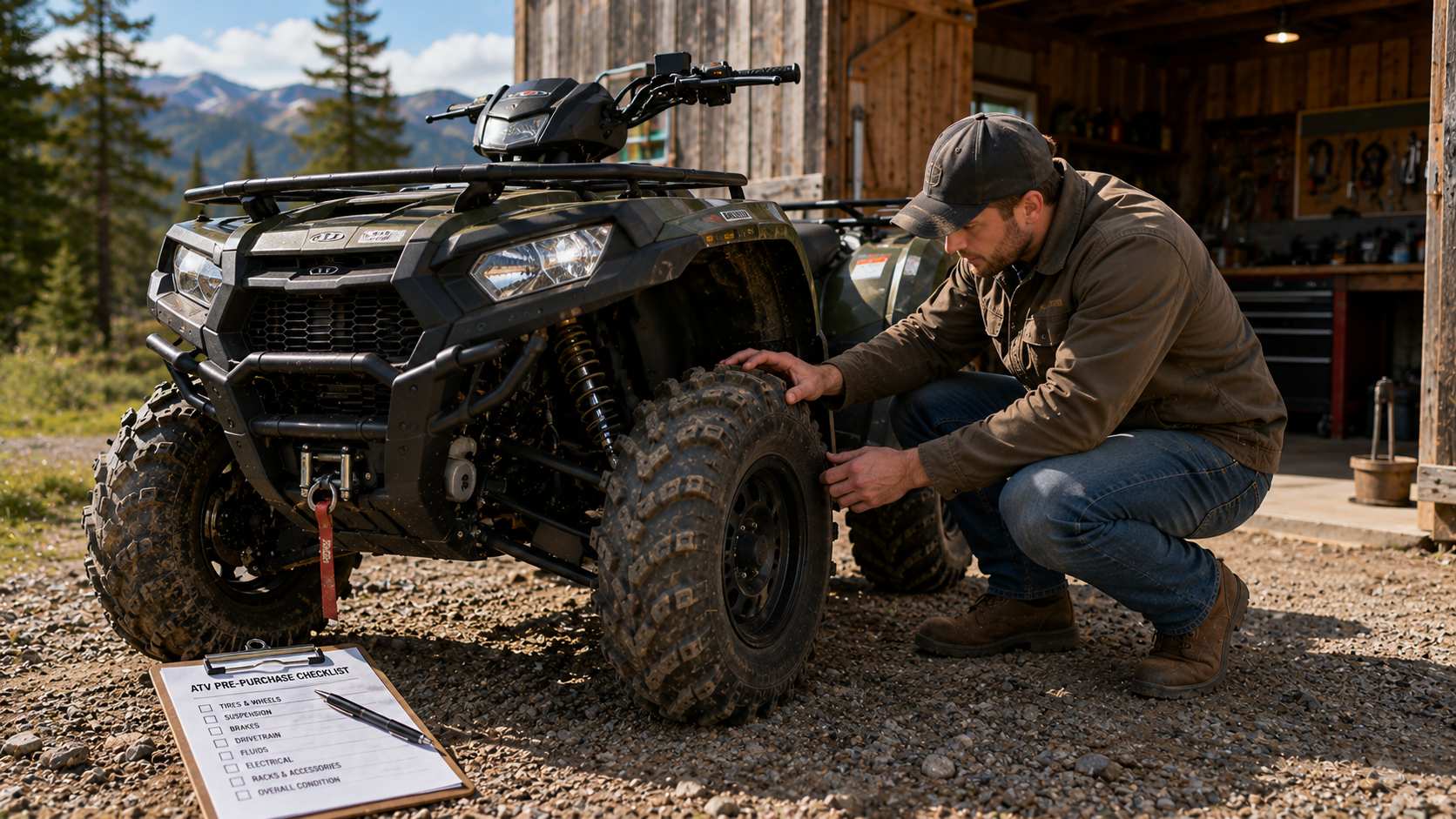
Choosing an ATV should involve more than comparing prices or selecting the largest available engine. Several technical and practical factors should be considered.
Choose the Right Engine Size
ATVs are available with a wide range of engine displacements.
Smaller-displacement models may be suitable for lighter-duty applications, while larger engines may provide additional performance for demanding terrain or utility requirements.
However, more displacement does not automatically mean that a vehicle is better for every buyer.
The appropriate engine should be selected according to the rider, vehicle dimensions, terrain, expected workload, manufacturer recommendations, and intended application.
Understand 2WD and 4WD
The drivetrain can significantly affect how an ATV performs in different environments.
A 2WD ATV may be appropriate for relatively moderate terrain and can offer a simpler configuration for some applications.
A 4WD ATV sends power to all four wheels when the system is engaged or configured to do so, depending on the vehicle design. This can provide additional traction when operating on mud, loose surfaces, steep terrain, or difficult farm trails.
Buyers expecting frequent operation in demanding off-road environments should carefully compare the drivetrain systems available on each model.
Compare Automatic and Manual Transmissions
Transmission type also affects the riding experience.
Automatic and CVT-equipped ATVs can reduce the amount of manual shifting required and may be convenient for riders who want straightforward operation.
Manual transmissions provide greater direct control over gear selection and may appeal to experienced riders or buyers with specific operating requirements.
Neither system is universally better. The right choice depends on rider preference and intended use.
Consider Shaft Drive vs. Chain Drive
Buyers comparing ATV specifications may encounter both chain-drive and shaft-drive systems.
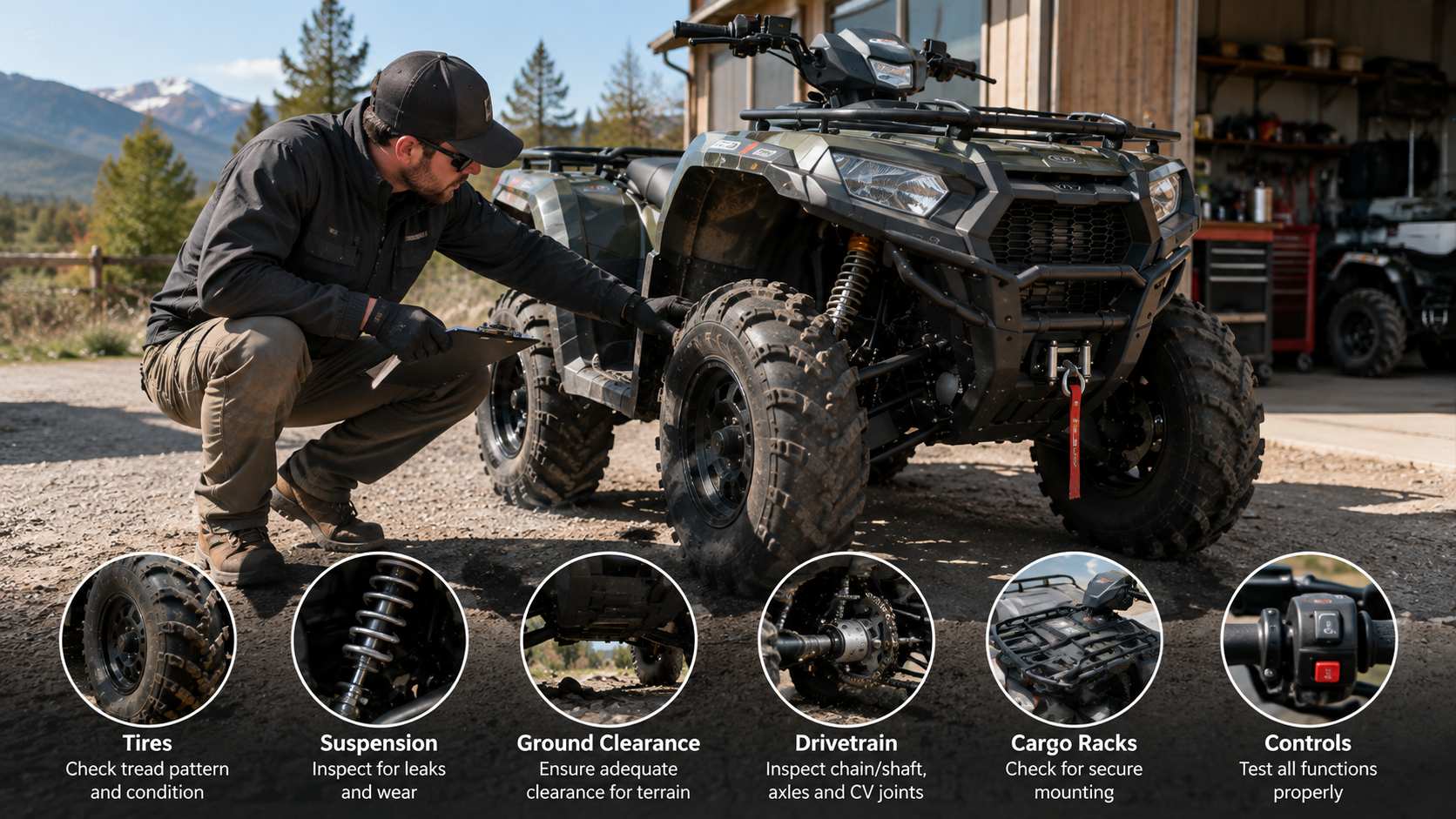
Chain-drive systems are common on many recreational and smaller ATV designs. They are relatively straightforward but require appropriate inspection, adjustment, and maintenance.
Shaft-drive systems are commonly found on utility-oriented ATVs and can reduce some routine chain-related maintenance requirements.
The complete drivetrain design, service requirements, replacement-part availability, and intended workload should be considered instead of evaluating the final-drive system in isolation.
Check Size, Weight, and Ground Clearance
Physical dimensions are especially important for off-road vehicles.
An ATV used on narrow forest trails may need a compact width and manageable turning radius. A farm vehicle may prioritize stability, ground clearance, cargo capability, and durability.
Buyers should consider where the ATV will actually operate before purchasing.
Storage and transportation matter as well. If the vehicle will be transported by trailer or stored in a limited space, its overall length, width, height, and weight should be checked in advance.
Evaluate Tires and Suspension
ATV tires directly influence traction and handling.
Different tread patterns may be designed for general trails, mud, sand, hard-packed surfaces, or mixed terrain. Selecting tires appropriate for the intended environment can be more useful than simply choosing the most aggressive tread.
Suspension should also be considered, particularly for uneven trails or frequent utility operation.
Consider Gasoline vs. Electric ATVs
Electric ATVs are becoming another option for certain recreational and utility applications.
They may offer quieter operation and a different maintenance profile from gasoline-powered vehicles. This can be useful in farms, private properties, resorts, or environments where lower operating noise is desirable.
Gasoline ATVs, meanwhile, remain widely used where longer operating periods, established refueling infrastructure, or particular performance characteristics are required.
Electric ATV buyers should pay close attention to battery capacity, charging requirements, operating range, motor output, and replacement battery availability.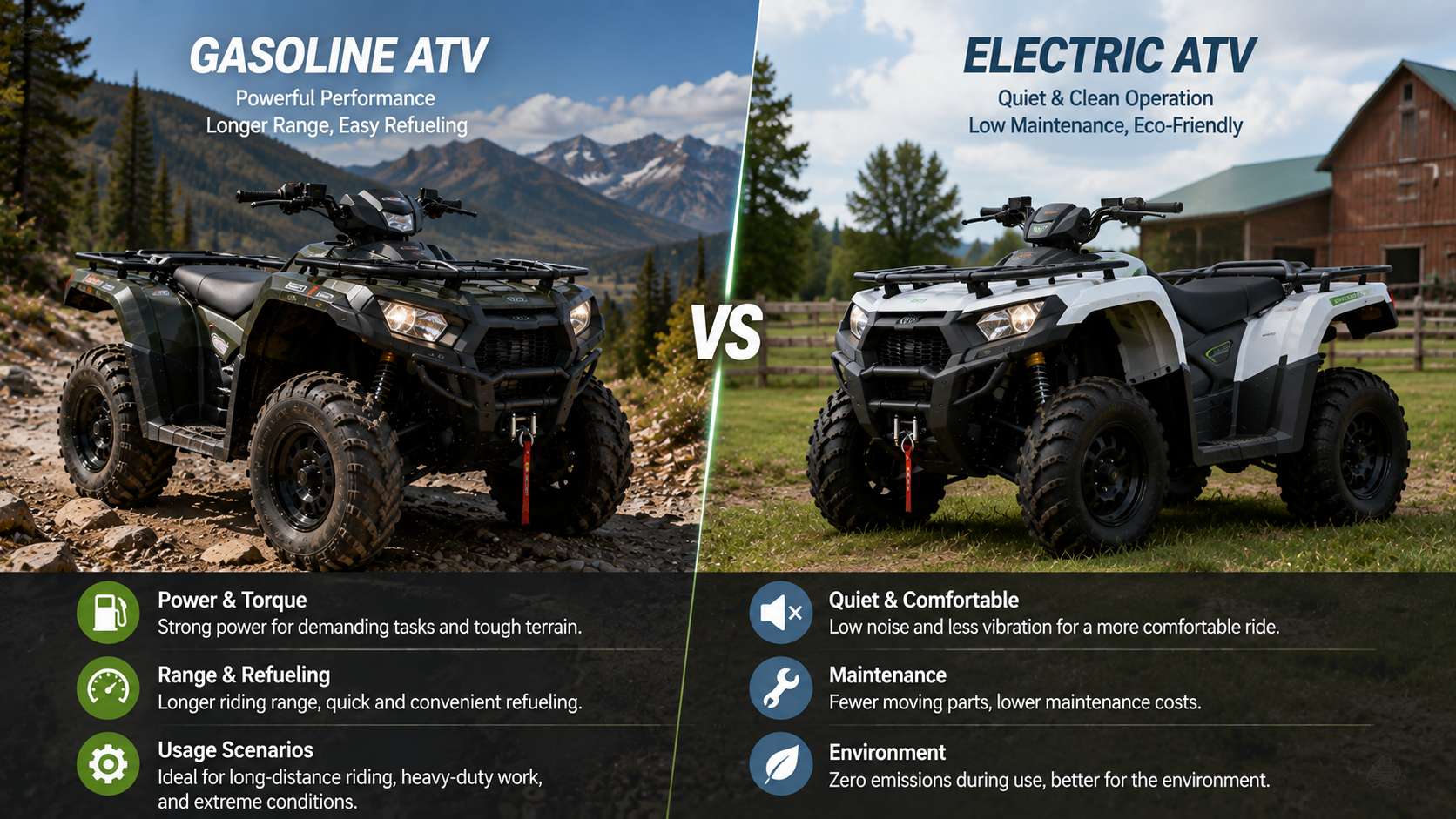
Check Parts and After-Sales Support
Parts availability is an important consideration that buyers sometimes overlook.
ATVs operate in demanding environments, and components such as brake parts, tires, suspension components, drivetrain parts, filters, batteries, and other wear items may eventually require maintenance or replacement.
Dealers, distributors, and commercial buyers should confirm parts supply and technical support before placing larger orders.
For imported vehicles, documentation, spare-parts availability, packaging, warranty terms, and supplier support can be just as important as the initial purchase price.
Safety and Local Regulations
ATVs are powerful motor vehicles and should be operated responsibly.
Riders should use appropriate protective equipment, including a suitable helmet and other riding gear, and follow the manufacturer's operating instructions. Passenger use should only occur when the specific ATV is designed and approved for passengers.
Buyers should also check applicable local regulations concerning registration, insurance, minimum rider age, permitted riding areas, road use, and required safety equipment.
ATVs are primarily designed for off-road operation, and road-use rules vary by jurisdiction.
How to Choose the Right ATV
The best ATV is not necessarily the model with the highest engine displacement or the most features. It is the vehicle that best matches the buyer's intended application.
Recreational riders may prioritize maneuverability, suspension, and responsive handling. Farmers may focus on durability, traction, racks, and utility capability. Property owners may value reliability and ease of operation, while commercial buyers may also need to consider parts supply, OEM configuration, and long-term service support.
Before purchasing, compare the specifications of several models and identify the features that directly support your intended use.
Conclusion
An ATV can be a practical choice for recreational riders, farmers, hunters, property owners, and professionals who need compact transportation across off-road environments.
The purchasing decision should be based on more than price or engine size. Engine displacement, drivetrain, transmission, final-drive design, dimensions, tires, suspension, power source, maintenance requirements, and parts availability can all influence whether a particular ATV is suitable for the buyer.
Understanding these factors before purchasing makes it easier to select an ATV that matches the terrain, workload, rider requirements, and long-term ownership expectations.